IThe Inheritance
Who I am, and the one sentence I was given.
Every family has a story it tells when the lights go out. Mine is about a woman four generations back whom the village kept and the parish feared. She found lost rings and strayed cattle. She knew who was at the door before the knock. She could, the old people swore, take the sting out of a burn by passing her hand over it, and on one winter night, the story goes, she walked a mile through snow to a house where a child had fallen into the well, though nobody had sent for her. The family said she had the gift. The priest said she had something else. She said neither.
What came down to me was not the gift. It was a box of her things, a thimble, a bone-handled knife, a little board with letters burned into it by hand, and a sentence my grandmother repeated whenever anyone at the table used the word supernatural. Nothing comes in from outside, child. It all comes up from in.
I have spent my life testing that sentence. I have made boards and planchettes with my own hands for more than twenty years, read the laboratory record from Faraday’s tables to the brain implants of this year, and sat at the board in daylight and in the dark. I have come to the conclusion she reached without a single journal: she was right. The power was hers. It was not given to her. It grew in her, the way a language grows in a child, from use.
Which means it can grow in you. This page is the map. It is written for the impatient, and I mean that kindly: for anyone who suspects there is more to the mind than their life has used, and who would rather be shown the road than spend twenty years finding it. Every section ends in something to do. If you have no patience for the why, skip to the Rite and begin tomorrow, in daylight. I will explain the daylight.
IIThe Source
The one idea on which everything else depends.
Here it is, stated once, so that nothing later can be mistaken for something else. None of the powers on this page requires a force from outside you. Not a spirit, not an energy, not a guide. Whatever you have been told answers through the board, swings the pendulum, lifts the car or speaks in the quiet, the evidence of two centuries points to a single source, and it is the three pounds of living tissue behind your eyes.
I do not say that to make the subject smaller. I say it because it is the larger claim. A spirit that moves a planchette is a party trick. A mind that can move a planchette without knowing it is moving it, that can know an answer it does not know it knows, that can lift a car when a child is under it and double its memory in forty days, is the most astonishing thing in the known universe, and you are wearing one.
Nothing comes in from outside.
It all comes up from in.
The word supernatural means above nature. Almost every power ever given that name turned out, when somebody finally looked, to be nature not yet understood. Lightning was the wrath of heaven until Franklin flew his kite. Seizures were the sacred disease until a Greek physician said otherwise. A paralysed man moving a cursor by thought alone would have been a miracle in 2005; in 2006 it was a paper in Nature. The faculties on this page are natural. What has been unnatural is how few people train them.
One thing I will not tell you is that you use ten per cent of your brain. That is a myth, and a lazy one: scans show the whole organ at work across a day, and there is no idle nine-tenths waiting for a key. The truth is better. You use all of it. What you have not used is its capacity to rewire itself. The brain is not a fixed machine with locked rooms. It is a machine that rebuilds itself around whatever you ask of it, again and again. That is the whole secret; the rest of this page is evidence and instructions.
And here is my promise, so that you know what kind of guide you have. I will tell you what has been measured, by whom and when. Where the evidence is thin, I will say so. Where a power has never been shown in a laboratory, I will tell you that too, and then what can be done instead. A guide who will not tell you where the road ends is not taking you anywhere.
IIIThe Instrument
Three pounds, twenty watts, and the most complicated object known.
Calculators beat you at long division and machines beat you at chess. That is not the comparison that matters. No machine yet built learns to see, walk, speak, love, lie, forgive, play the violin and find its way home in the dark, all in one body, repairing itself as it goes, on the power of a dim light bulb. The most powerful computer that has ever existed was not built. It grew, and it grew in you.
Its defining property is the one that matters here. In 1890 the psychologist William James borrowed a word from the engineers, plasticity, for the way the nervous system yields to repeated use without collapsing. In 1949 Donald Hebb proposed the mechanism: when one cell repeatedly helps to fire another, the link between them grows stronger. The phrase you may have heard came later, and it is the best four-word summary in science: cells that fire together wire together.
Everything that follows is a consequence of that sentence. A path walked every day becomes a road. A letter traced every day becomes reading. A movement imagined every day becomes, as you will see, measurably stronger muscle. And a board touched every day, letter by letter, becomes an instrument the hand can play without you.
IVThe Record
What the instrument has been caught doing, from the first papyrus to this year.
Here is the evidence, in order. I have gone back as far as the written record allows and come forward to this autumn. Read it as one story: century by century, the territory called supernatural shrinks, and the territory called the mind grows to take its place. The last few years move so fast that I have kept them brief.
Before the laboratory
- c. 1600 BCE
The first word for brain
The Edwin Smith Papyrus, a surgeon’s manual copied from a text perhaps a thousand years older, contains the oldest known written word for the brain. Its author likens the folds of an exposed brain to the ripples on cooling metal, and notes that a wound to the head can take away the use of the limbs. The mind has an address, and the address is the skull.
Edwin Smith Surgical Papyrus, New York Academy of Medicine - c. 400 BCE
The sacred disease is not sacred
A Hippocratic physician writes that epilepsy, which his neighbours blamed on the gods, comes from the brain like every other illness, and that from the brain alone come joy, grief, laughter, thought and dreams. It is the first recorded case of a power being moved from the gods to the mind. It will not be the last.
Hippocratic Corpus, On the Sacred Disease - 1543
The brain drawn as it is
Andreas Vesalius publishes the Fabrica, with the brain dissected layer by layer and drawn from life rather than copied from Galen. For the first time an educated reader can see what is inside their own head.
Vesalius, De humani corporis fabrica, Basel, 1543 - 1664
Neurology gets its name
Thomas Willis, with drawings by Christopher Wren, places memory, will and imagination in the solid tissue of the brain rather than its empty chambers, and coins the word neurology.
Willis, Cerebri anatome, London, 1664 - 1791
The spark in the frog
Luigi Galvani makes a dead frog’s leg kick and argues that the body runs on electricity of its own. He is right. Every thought you have is, among other things, an electrical event.
Galvani, De viribus electricitatis in motu musculari, 1791
The nineteenth century · the hand that moves by itself
- 1833
Chevreul’s pendulum
The chemist Michel-Eugène Chevreul, asking why a ring on a thread answers questions, finds that it swings less when his arm is supported and stops altogether when he is blindfolded. The movement was his own, too small for him to feel.
Chevreul, letter to Ampère, 1833; De la baguette divinatoire, 1854 - 1848
Character lives in tissue
An iron bar is blown through the front of Phineas Gage’s skull on a Vermont railway. He survives, and his friends say he is no longer Gage. Personality, it turns out, is something the brain does.
Harlow, 1848 and 1868 - 1852
The ideo-motor action
William Benjamin Carpenter tells the Royal Institution that an idea held in the mind can move the muscles without any act of will, and gives the thing a name. Every talking board in the world has run on it since.
Carpenter, Royal Institution, March 1852 - 1853
Faraday’s table
Michael Faraday glues loose layers of card to a tabletop to catch the sitters at table-turning. The card shows they were pushing; when they can see the indicator, the table stops. None of them had felt the push.
Faraday, letter to The Times, 30 June 1853 - 1855
Taking the hands off
Robert Hare, emeritus professor of chemistry at the University of Pennsylvania, builds the spiritoscope: a dial turned by a sitter who cannot see the letters. It is the first machine built to separate the hand from the answer. The whole story is at Spiritoscopes.
Hare, Experimental Investigation of the Spirit Manifestations, 1855 - 1861
Speech has an address
Paul Broca examines the brain of a man who could say one syllable only, and finds the damage in one region of the left frontal lobe. Faculties, it seems, live in places.
Broca, Paris, 1861 - 1885
The shape of forgetting
Hermann Ebbinghaus memorises thousands of nonsense syllables, draws the curve by which they fade, and shows that practice spread across days holds far better than the same practice crammed into one. It is the reason the Rite is daily.
Ebbinghaus, Über das Gedächtnis, 1885 - 1890
Plasticity
William James applies the engineers’ word plasticity to the nervous system, a structure that yields to habit without breaking, and writes that every idea of a movement awakens some degree of the movement itself.
James, The Principles of Psychology, 1890 - 1891
The talking board patented
US patent 446,054 is granted to Elijah Bond for the board the Kennard Novelty Company sells as the Ouija. It is, in effect, a machine for reading the ideo-motor action, though nobody yet says so. The patents are at Planchettes.
US Patent 446,054, 10 February 1891
The twentieth century · the wiring found
- 1906
The neuron
Santiago Ramón y Cajal shares the Nobel Prize for showing that the brain is built of separate cells meeting at tiny gaps, which Charles Sherrington had named synapses. Learning, it will turn out, happens in the gaps.
Nobel Prize in Physiology or Medicine, 1906 - 1924
The brain’s weather
Hans Berger, in Jena, records the electrical rhythms of a human brain through the scalp. He had been driven to it, he said, by an experience in his youth that he took for telepathy. What he found instead was the EEG.
Berger, published 1929 - 1949
Fire together, wire together
Donald Hebb proposes that when one cell repeatedly helps to fire another, the connection between them grows stronger. Every practice on this page depends on it.
Hebb, The Organization of Behavior, 1949 - 1961
The governor found
Michio Ikai and Arthur Steinhaus fire a pistol behind volunteers as they pull, and their greatest strength rises. So it does when they shout, and under hypnosis. The ceiling on human strength is set in the brain, below what the muscle can do.
Journal of Applied Physiology, 1961 - 1969
Mind over meter
Eberhard Fetz rewards monkeys whenever a single neuron in the motor cortex fires faster. They learn to fire it at will: the first proof that a brain can learn to drive a machine directly.
Science, 1969 - 1973
A name for the dream
Jacques Vidal at UCLA coins the phrase brain–computer interface, and sets out to build one.
Annual Review of Biophysics and Bioengineering, 1973 - 1983
The brain decides first
Benjamin Libet finds that the brain’s preparation for a movement begins about a third of a second before the person is aware of deciding to move. The ideo-motor action is not an exception to how you move. It is how you move.
Brain, 1983 - 1984
The sounds you lost
Janet Werker and Richard Tees show that babies hear distinctions in foreign languages that their parents cannot, and lose them before their first birthday. You were born with more than you kept.
Infant Behavior and Development, 1984 - 1995
Imagined practice
Alvaro Pascual-Leone has volunteers practise a five-finger piano exercise for five days, some at the keyboard and some only in imagination. The imaginers’ motor maps change almost as much as the players’.
Journal of Neurophysiology, 1995 - 1996
Mirror neurons
Giacomo Rizzolatti’s team in Parma reports cells that fire both when a monkey grasps something and when it watches another do the same. The brain rehearses what it sees.
Cognitive Brain Research, 1996 - 1998
New cells in old brains
A Swedish and American team finds new neurons born in the hippocampus of adult human brains. How many, and for how long, is still argued.
Nature Medicine, 1998
The twenty-first century · training changes the organ
- 2000
The Knowledge
Eleanor Maguire scans London taxi drivers, who memorise some 25,000 streets, and finds the rear of the hippocampus larger in proportion to their years at the wheel. In 2011 she follows trainees for four years: those who qualify grow it; those who fail do not.
PNAS, 2000; Current Biology, 2011 - 2002
The illusion of authorship
Daniel Wegner argues that the feeling of having done something is a separate product of the brain, and that it can come apart from the doing. The talking board is his star example.
Wegner, The Illusion of Conscious Will, 2002 - 2003
Eyes of the sea
Anna Gislén finds that Moken children of the Andaman Sea see more than twice as sharply underwater as European children. In 2006 she trains European children for a month, eleven sessions, and they catch up.
Current Biology, 2003; Vision Research, 2006 - 2004
Strength by thought
Volunteers imagine pushing as hard as they can, fifteen minutes a day, five days a week, for twelve weeks, without moving at all. Their little fingers grow thirty-five per cent stronger; their elbows, thirteen and a half.
Ranganathan and others, Neuropsychologia, 2004 - 2004
The juggler’s brain
Three months of learning to juggle visibly enlarges grey matter in regions that track motion. Three months without juggling, and it shrinks back.
Draganski and others, Nature, 2004 - 2005
The meditator’s cortex
Sara Lazar finds that long-term meditators have thicker cortex in regions for attention and bodily sensation.
NeuroReport, 2005 - 2006
Telekinesis by wire
Matthew Nagle, paralysed from the neck down, moves a cursor, opens email and closes a prosthetic hand by thought, through ninety-six electrodes in his motor cortex.
Hochberg and others, Nature, 2006 - 2009
Eighty-six billion
Suzana Herculano-Houzel’s laboratory counts the neurons of the human brain for the first time rather than estimating them: about 86 billion.
Azevedo and others, Journal of Comparative Neurology, 2009 - 2009
Fifteen months of piano
Six-year-olds given fifteen months of keyboard lessons show structural changes in motor and hearing regions that track their improvement. They were not prodigies.
Hyde and others, Journal of Neuroscience, 2009 - 2010
Reading rewires
Stanislas Dehaene’s team scans illiterate, late-literate and literate adults. Learning to read, even as an adult, rebuilds the visual cortex.
Science, 2010 - 2010
The honest placebo
Patients told plainly that their pills are sugar still improve: fifty-nine per cent report adequate relief, against thirty-five per cent of those given nothing.
Kaptchuk and others, PLoS ONE, 2010 - 2011
Seeing with sound
Expert human echolocators, scanned while listening to their own clicks, process the echoes in the visual cortex. In a real sense, they are seeing.
Thaler, Arnott and Goodale, PLoS ONE, 2011 - 2012
The board knows
When people believe they are guessing, their spoken answers are right half the time, which is chance. Their answers through a talking board are right sixty-five per cent of the time.
Gauchou, Rensink and Fels, Consciousness and Cognition, 2012 - 2012
A sip of coffee
Cathy Hutchinson, unable to move her arms for nearly fifteen years, lifts a bottle of coffee to her lips with a robotic arm moved by thought.
Hochberg and others, Nature, 2012 - 2013
Brain to brain
Rajesh Rao, in one building, thinks of moving his finger. Across the University of Washington campus, Andrea Stocco’s finger moves. The signal travelled by EEG, the internet and a magnetic coil.
University of Washington, 2013 - 2013
Inner fire
Tibetan nuns practising g-tummo meditation raise their core body temperature into the range of a mild fever, at will.
Kozhevnikov and others, PLoS ONE, 2013 - 2014
The immune system answers
After ten days of training in breathing, cold and meditation, volunteers injected with a bacterial toxin produce more adrenaline, fewer inflammatory proteins and fewer flu-like symptoms than the untrained. A system long thought beyond voluntary reach turns out to be reachable.
Kox and others, PNAS, 2014
The last ten years
- 2016
The bypass
Ian Burkhart, paralysed in a diving accident, grasps, pours and swipes a card with his own hand, his thoughts routed around the injured spinal cord by computer.
Bouton and others, Nature, 2016 - 2017
The memory palace
Ordinary people trained in the ancient method of loci, forty half-hour sessions over six weeks, more than double their recall of a word list, from about 26 words to about 62, and their brain networks come to resemble memory champions’. Four months later the gain is still there.
Dresler and others, Neuron, 2017 - 2017
Reading at any age
Women in northern India who had never been to school are taught to read for six months. The changes reach past the cortex into the brainstem and thalamus, the brain’s oldest relay stations.
Skeide and others, Science Advances, 2017 - 2018
Predicting minds
Eye-trackers on forty board enthusiasts at a paranormal conference show their gaze arriving at each next letter before the planchette does, as the message forms between them. The answer, the authors conclude, emerges between two predicting minds.
Andersen and others, Phenomenology and the Cognitive Sciences - 2019
Three minds, one puzzle
Three people, linked by EEG and magnetic stimulation, solve a block-turning puzzle together without a word.
Jiang and others, Scientific Reports, 2019 - 2021
The alphabet still there
A man paralysed below the neck imagines writing letters by hand, and a decoder turns the thought into text at ninety characters a minute. The alphabet his hand learned as a child was still there, waiting.
Willett and others, Nature, 2021 - 2021
Talking to dreamers
Researchers in four countries hold two-way conversations with people in lucid dreams, who answer arithmetic problems with their eyes from inside the dream.
Konkoly and others, Current Biology, 2021 - 2021
Echolocation in ten weeks
Blind and sighted people aged 21 to 79 learn to see with tongue clicks in ten weeks. Age does not limit how fast they learn.
Norman, Dodsworth, Foresteire and Thaler, PLoS ONE, 2021 - 2023
Speech and walking restored
Two women who had lost their speech, to ALS and to a stroke, speak through brain implants at 62 and 78 words a minute; a paralysed man walks again through a wireless bridge from brain to spine.
Willett; Metzger; Lorach and others, Nature, 2023 - 2024
The year of the map
Noland Arbaugh plays chess by thought through Neuralink’s first human implant. Casey Harrell, silenced by ALS, speaks through his with ninety-seven per cent accuracy. One cubic millimetre of human cortex is mapped cell by cell, and the first complete wiring diagram of a whole brain is published: a fruit fly’s, about 140,000 neurons.
NEJM; Science; Nature, 2024
This year and last · in brief
- 2025
A mouse’s millimetre
More than 200,000 cells and half a billion synapses mapped, with their activity.
MICrONS, Nature, April 2025 - 2025
An instant voice
An implant speaks the instant its user tries to, with intonation, and lets him sing a simple melody.
Wairagkar and others, Nature, June 2025 - 2025
Inner speech, with a password
Silent, imagined sentences read from the motor cortex at up to 74 per cent accuracy, unlocked only when the user thinks a chosen passphrase.
Kunz and others, Cell, August 2025 - 2026
On sale
China approves the first brain implant for commercial use: Neuracle’s NEO, for hand movement after spinal-cord injury.
NMPA, 13 March 2026 - 2026
Typing by thought
BrainGate participants type with attempted finger movements at up to 110 characters a minute, at home.
Nature Neuroscience, March 2026
Notice the direction of travel. In two and a half thousand years, nothing has once been taken back from the mind and returned to the spirits.
VYou Have Done This Before
The most supernatural thing you can do, you learned at six.
Look at these marks: b d p q. To the eye they are one shape turned four ways. To you, now, they are four different sounds, and you cannot stop yourself hearing them. Nothing in human evolution prepared you for that. Writing is about five thousand years old, the first tablets pressed at Uruk around 3200 BCE, and that is far too short a time for the brain to have grown an organ for it. You read anyway.
The neuroscientist Stanislas Dehaene calls the trick neuronal recycling. A patch of cortex on the underside of the left hemisphere, shaped over millions of years to recognise faces, tools and predators, is captured during childhood and retrained to recognise letters. In 2010 his team scanned adults in Portugal and Brazil who had never learned to read, adults who had learned late, and adults who had read since childhood. Reading had rewired all who had learned it, the late learners included: the letter area woke, the hearing areas began to answer written words, and the work of recognising faces shifted over to make room.
In 2017 a team working in northern India taught women who had never been to school to read, for six months. The changes reached down past the cortex into the brainstem and the thalamus, the oldest relay stations in the brain. Six months. Adults. Nobody had told them they were too old.
Now remember how you did it. A finger on the line. One letter at a time. Each one said aloud. Every day, for months, until one day you stopped seeing letters and started seeing words, and the page began to speak to you in a voice that seemed to come from nowhere. That voice is the one you are hearing as you read this sentence. It is the same kind of voice that will one day come up through the planchette, and you will build it the same way.
There is even a name for why the saying aloud matters. Psychologists call it the production effect: words read aloud are remembered better than words read silently, because the mouth, the ear and the eye each lay down their own trace. Children are made to read aloud for a reason, and the Rite asks the same of you.
VIThe Hendrix Clause
On geniuses, and why you need not be one.
At fourteen, Wolfgang Mozart heard Allegri’s Miserere in the Sistine Chapel, a setting the chapel guarded and did not publish, and wrote it out from memory that night. In 1824 Ludwig van Beethoven stood on the stage in Vienna for the first performance of his Ninth Symphony, so deaf that he had to be turned around to see the audience applauding; he had composed it with an inner ear more exact than most people’s outer one. Jimi Hendrix could not read a note of music. His first instrument was a ukulele with a single string, found in the junk he was helping his father haul away, and he played the guitar upside down because he was left-handed and the guitar was not.
These are anomalies, and I will not pretend otherwise. A large review of the research in 2014 found that practice accounts for only about a fifth of the difference between ordinary musicians and extraordinary ones; the rest is temperament, an early start, the shape of a hand, and luck. You will not become Mozart by practising.
But here is the clause I want you to sign. Every human being with working hands and ears possesses the ability to learn an instrument, and with daily practice does, to real effect. In 2009 researchers gave six-year-olds fifteen months of piano lessons and scanned their brains before and after. The motor and hearing regions had physically changed, and the change tracked how much they had improved. They were not prodigies. They were children who had practised.
The faculties on this page are instruments of the same kind. In every age there have been a few people who could do with the board or the pendulum or the inner voice what Hendrix did with six strings, and I will not tell you that you will be one of them. But the instrument is in you whether or not you are a genius, and it will play, to some effect, for anyone who picks it up every day.
The greats are proof of what the instrument can do. They are not proof that it belongs to them.
Part Two
The Instruments
The board, the pendulum, and the objects that cue the deep mind.
VIIThe Board, and the Hand That Moves It
What a talking board actually is, and why it works.
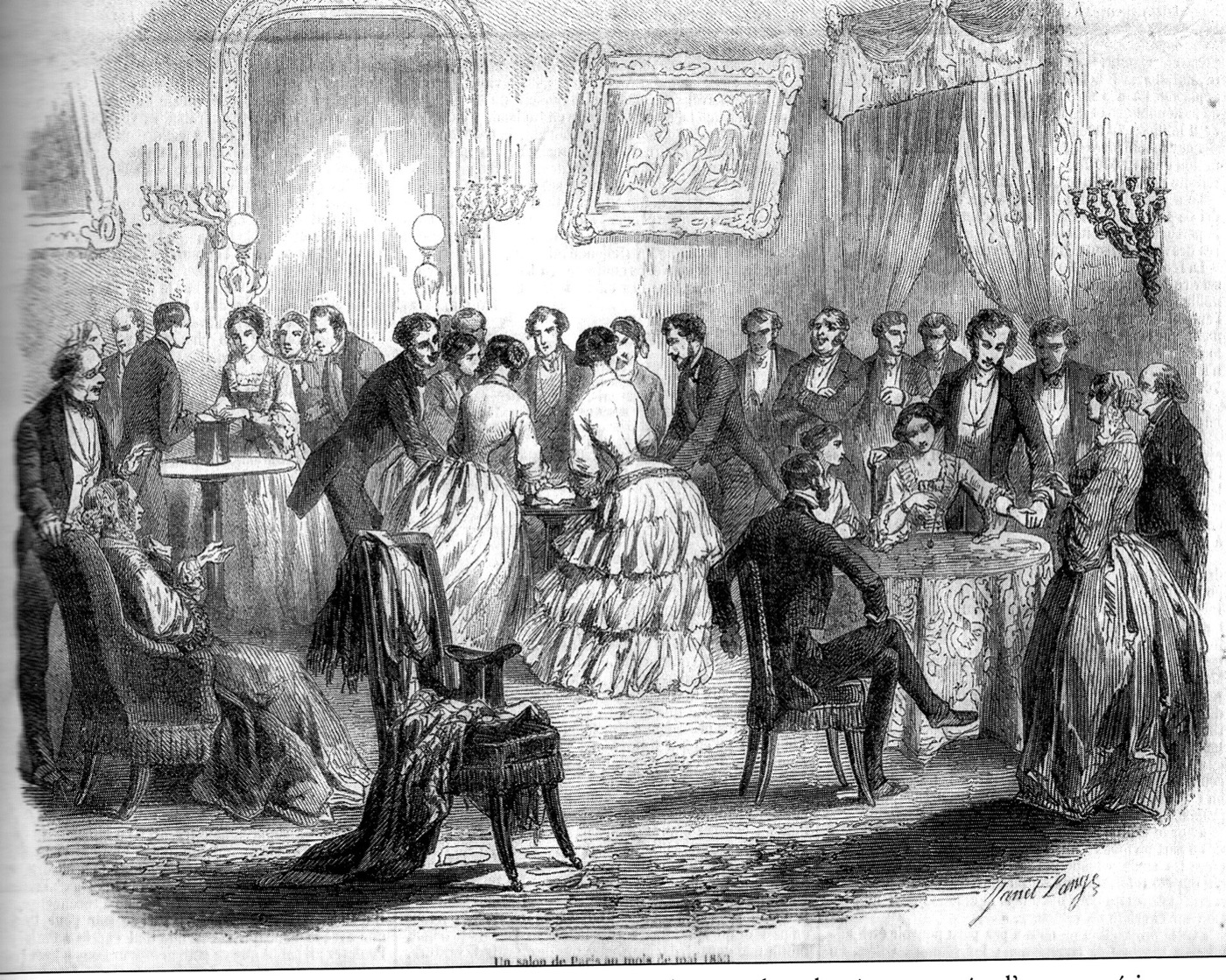
The talking board most people know was patented in 1891, US patent 446,054, granted to Elijah Bond and sold by the Kennard Novelty Company of Baltimore under a name that became a trademark and then a word: Ouija. Before it came the planchette of the 1850s and 60s, a heart of wood on two castors with a pencil for its third leg, and before that the turning tables of 1853, when half of Europe sat around its furniture with fingertips on the rim and watched the furniture walk.
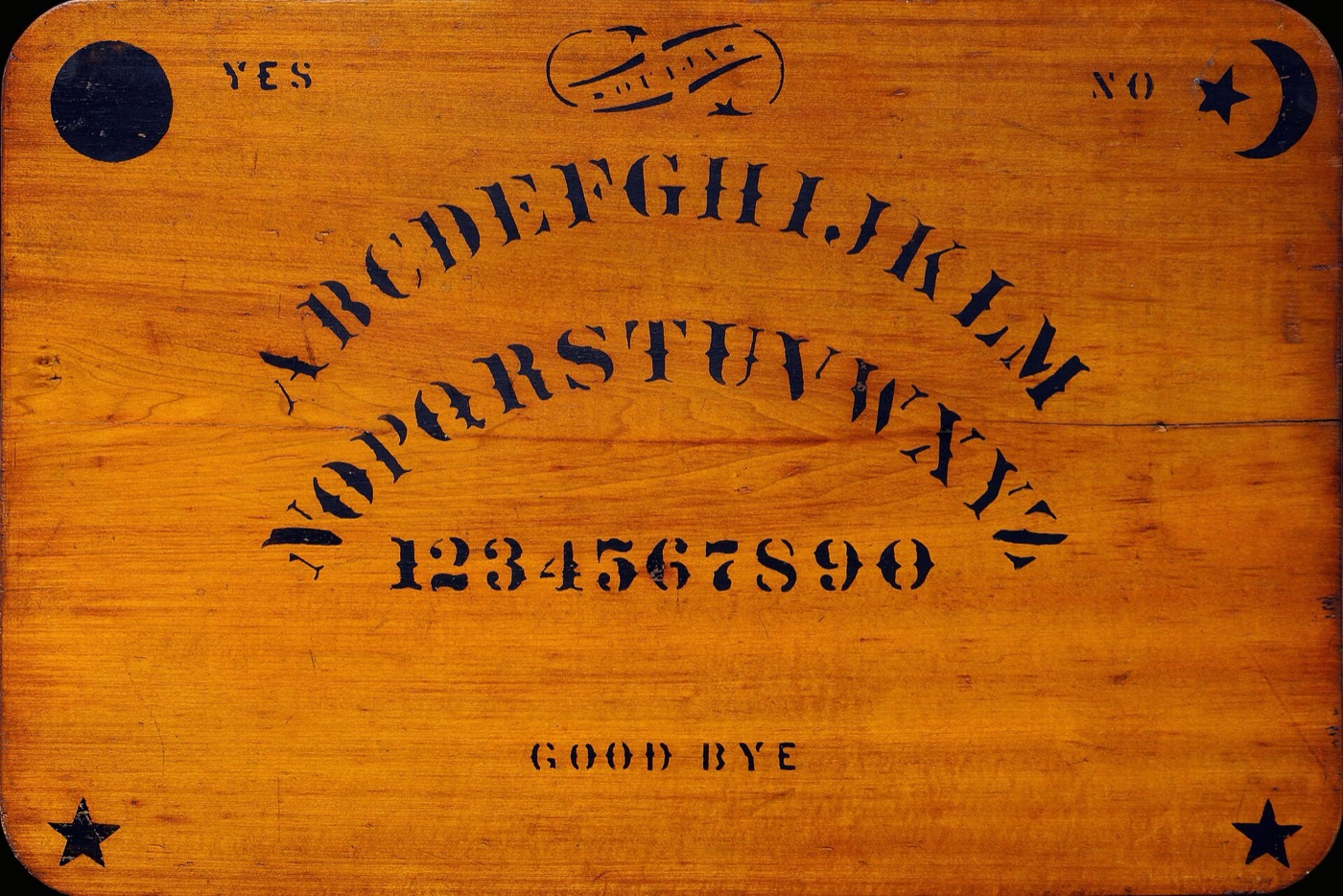
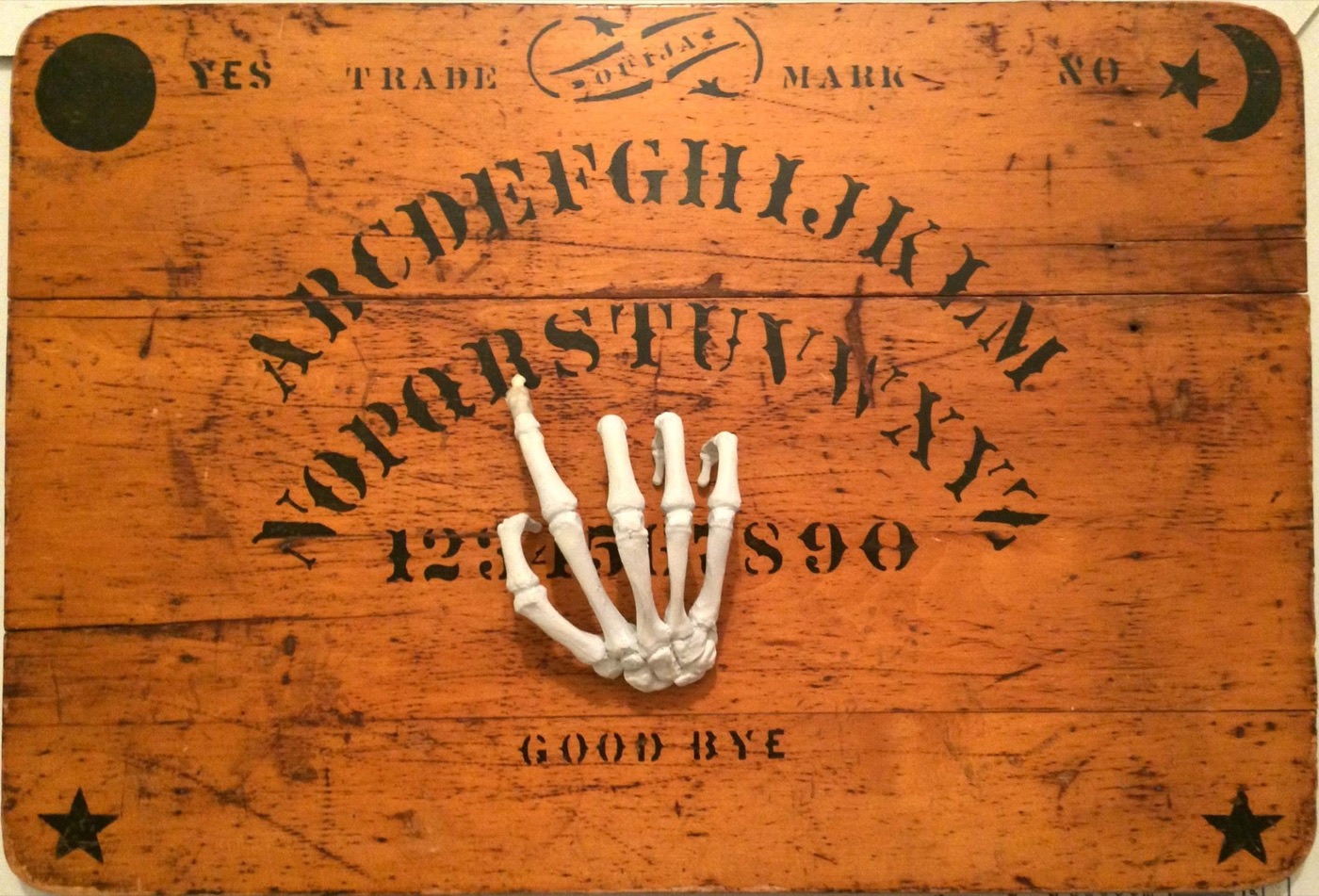
Two scientists of the first rank took the tables seriously, which is more than most of their colleagues managed. In 1852 the physiologist William Benjamin Carpenter named what he believed was happening: the ideo-motor action, an idea held in attention moving the muscles without any decision to move them. In 1853 Michael Faraday built a device to catch it, a stack of card glued loosely to the tabletop with an indicator that showed which way the hands were pushing. When the sitters could see the indicator, the table stopped turning. They had been pushing. Not one of them had felt it.
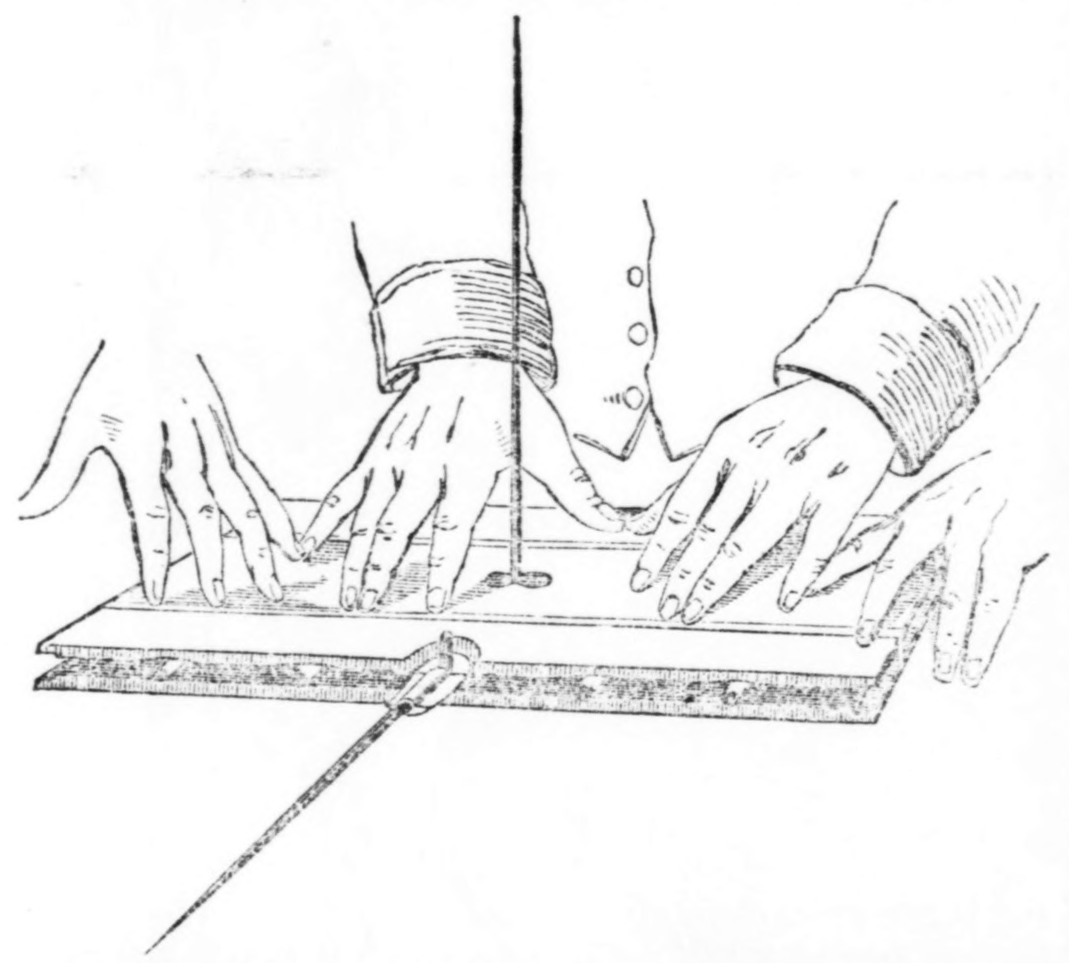
Twenty years earlier the chemist Michel-Eugène Chevreul had caught the same thing in a pendulum: a ring on a thread, swinging in answer to his questions, which slowed when he steadied his arm and stopped altogether when he was blindfolded. William James, in 1890, gave it the form I still think best: every idea of a movement awakens, in some degree, the movement itself.
For a century and a half that was taken as the end of the matter, and it was meant as a debunking. Look at it again. A thought, held without effort, moves the body precisely, without the thinker’s knowledge, toward the thing the thinker is attending to. That is not a debunking. It is the description of a hidden channel from the deep mind to the hand, and the board is the instrument that makes the channel legible.
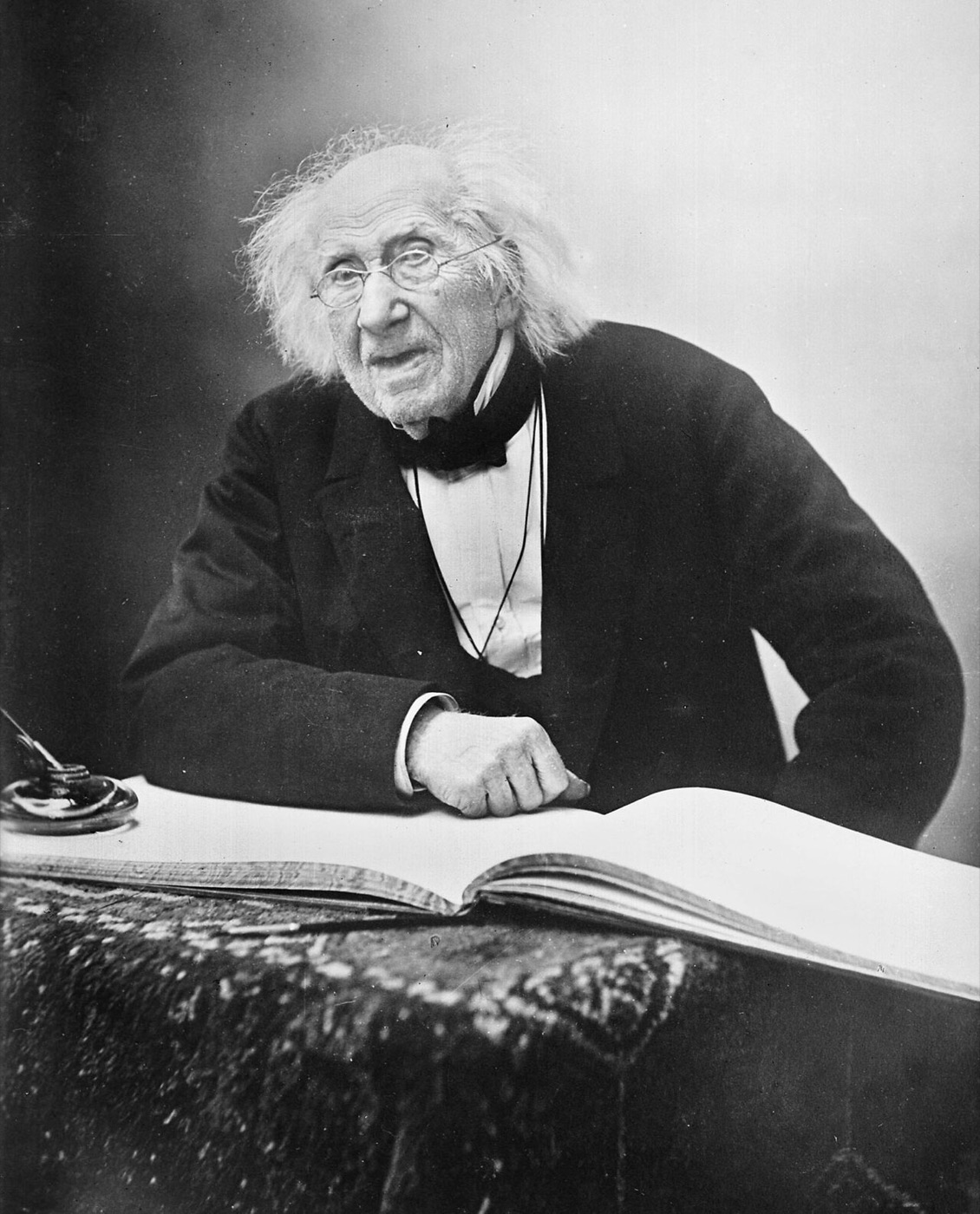
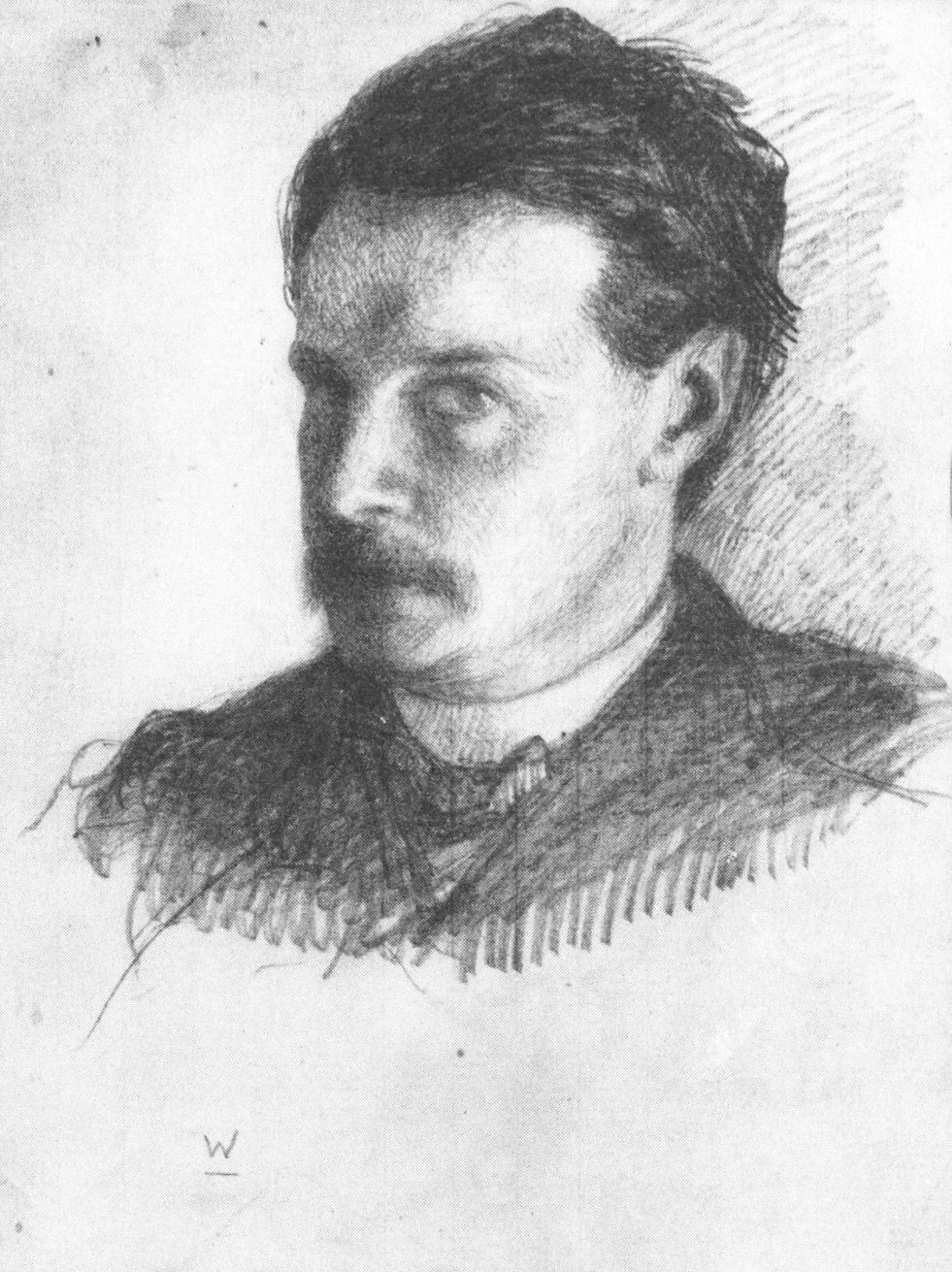
In 2012 three researchers at the University of British Columbia, Hélène Gauchou, Ronald Rensink and Sidney Fels, put that to the test. They asked people yes-or-no questions of general knowledge, by voice and through a board. On the questions where people believed they were only guessing, their spoken answers were right half the time, which is chance. Their answers through the planchette were right sixty-five per cent of the time. The hand knew what the speaker did not know she knew.
A few years later a team at Aarhus University put eye-trackers on forty board enthusiasts at a paranormal conference. As each session unfolded, the sitters’ eyes began to arrive at the next letter before the planchette did: they were predicting the message as it was being written, together, while each of them felt that someone else was moving it. The meaningful answer, the researchers concluded, emerged between two predicting minds.
So this is what a talking board is: an amplifier for the movements of the part of you that knows more than you do, and a way of seeing its answers spelled out. Whatever you believe answers, and I have told you what I believe, it has only one way to reach the board, and that is through your hand. Train the hand, and you train the channel.
VIIIThe Daylight Rite
Thirty-nine stations, once a day, for a month. The most important thing on this page.
This is my own method, and it is the reason this site exists. It is not a séance. Nothing is called, nothing is asked, and nothing answers. It is practice in the plain sense a pianist means by the word: you are teaching your hand the board the way you once taught your eye the alphabet, until the instrument becomes part of the body that plays it.
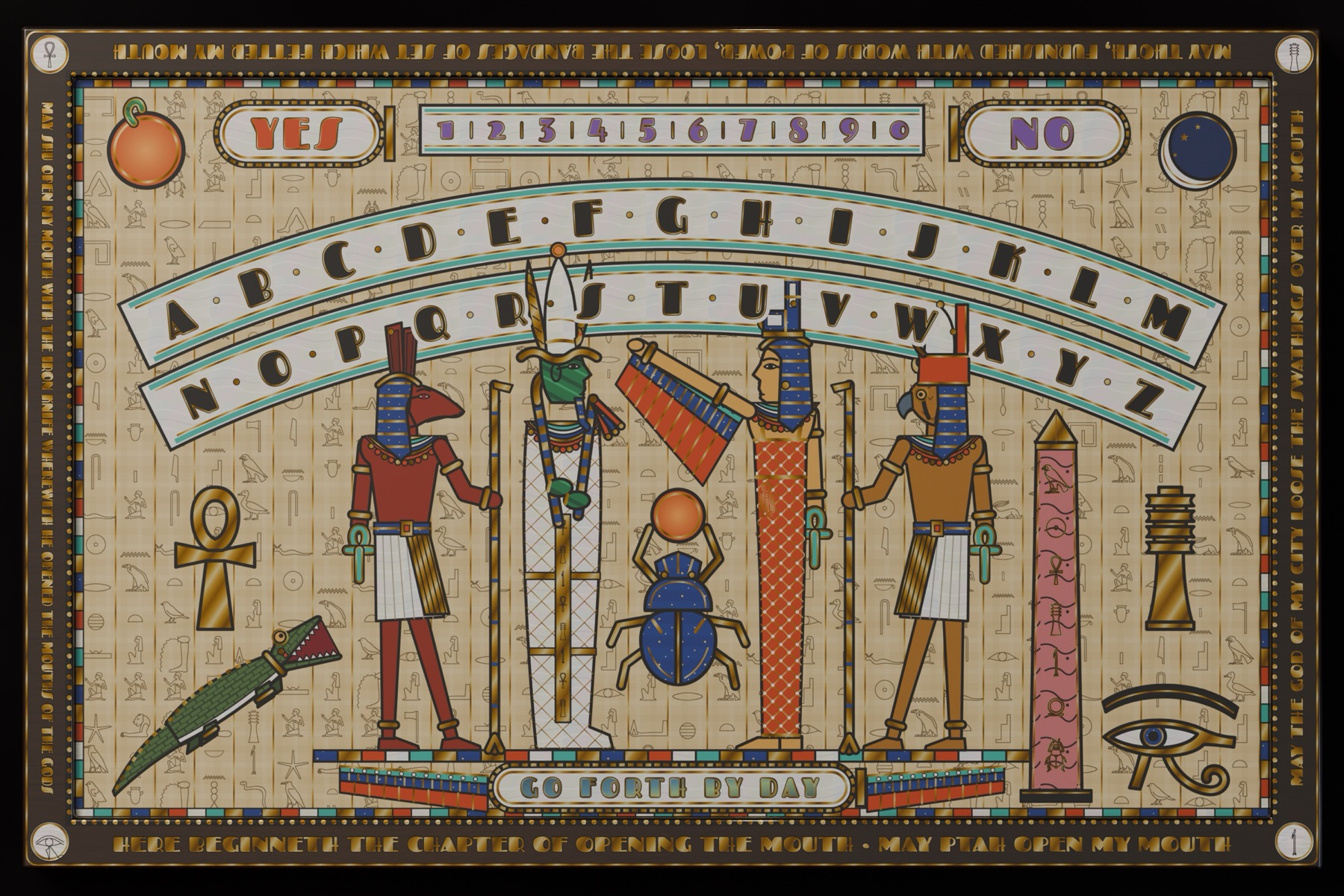
- 1
Choose the hour
Normal daylight. Not dusk, not candlelight, not midnight. You are not here to be frightened and you are not here to be impressed.
- 2
Be alone
Nobody else’s fingers on the planchette, and nobody watching.
- 3
Set the planchette on the board
In the centre, your fingertips resting on it lightly.
- 4
Move to A, and say it
Deliberately, consciously, slide the planchette until the letter A sits in its window. Say the letter out loud. Pause for a breath.
- 5
B through Z
Then B, then C, every letter in order to Z: each one moved to on purpose, each one said aloud.
- 6
Zero through nine
Then the numbers, 0, 1, 2, on to 9, the same way.
- 7
YES, then NO
Move to YES and say yes. Move to NO and say no.
- 8
Goodbye
End the round the same way every time: move the planchette, physically, all the way to GOOD BYE, and say goodbye out loud.
- 9
Again, for fifteen to twenty minutes
Run the whole round as many times as fits in fifteen or twenty minutes. End the session on GOOD BYE, and take your hands off the board. Once a day, every day, for at least a month.
Why it is built this way
Why daylight
Because the Rite is training, not summoning. Darkness and candles are tools with a purpose: they loosen attention and invite the strange, and you will want them later. For now you need the opposite: a plain room, full attention, and no fear. Fear is the governor at its loudest, and a frightened hand learns nothing but fear.
Why alone
Because while the map is being drawn it must be drawn by one hand. With two sitters neither can be sure who moved, which is the board’s great gift later and a hindrance now. Alone, every movement is unmistakably yours, and that is the point.
Why aloud
Because that is how you learned to read. The eye sees the letter, the hand moves to it, the mouth says it and the ear hears it: four channels laying down one memory. Psychologists call the advantage of the spoken word the production effect, and it is why teachers make children read aloud.
Why every station, in order
Because fluency is the whole aim. A child who must hunt for each letter cannot write a sentence. After a month your hand will know where every letter lives without looking, the way your fingers know a keyboard. In the Aarhus study, sitters spelling on purpose sent their eyes straight to each letter; in a real session they were slower to find them. The Rite trains the first skill so that the second can flow.
Why goodbye
Because every session must end, and end the same way. A clear closing tells the mind that the work is over and lets it file what it has learned. Sleep does the rest: in 2002 a Harvard study found that a practised finger sequence was about a fifth faster after a night’s sleep, with no further practice. And because a hand that has walked to GOOD BYE thirty times will never forget where it is.
Why fifteen minutes, daily, for a month
Because it is the dose that has changed brains before. Ranganathan’s volunteers grew stronger on fifteen minutes a day. Gislén’s children learned to see underwater in a month. Luhrmann’s volunteers sharpened their inner senses in a month of daily prayer. Spread across days, practice holds; crammed, it fades, as Ebbinghaus showed in 1885. A month draws the map. Two will make it a habit: in a London study, new habits took a median of sixty-six days to become automatic.
After the month
On day thirty-one, change one thing. Set the planchette in the centre, rest your fingertips on it as lightly as you can, ask a simple question whose answer you do not know, and wait. Do not steer, and do not stop it. What I expect you to find is that the planchette starts sooner, travels more smoothly, and goes where it is going without wandering, because the channel from the deep mind to the hand now has roads to travel on. That is not a spirit growing stronger. It is a channel growing wider. Then, and only then, add a second pair of hands, and the dusk.
Rehearse here
If your board has not arrived, or you want the order in your hand before you sit, use this one. Drag the planchette; the next station glows. It is a rehearsal, not the Rite: the Rite wants wood under your fingertips.
The ledger
Mark each day you complete the Rite, on any board. Your marks are kept in this browser only, and nobody sees them but you.
IXMoving Matter
Telekinesis, honestly: five rungs of a ladder.
Of all the powers this is the one people want most, and the one I must be most careful with. So, plainly: I have never seen a cup slide across a table under a stare, and neither has any laboratory that went looking. Princeton ran a laboratory for twenty-eight years, from 1979 to 2007, asking whether minds could nudge random-number machines; its effects were tiny, and when three laboratories tried to repeat them in 2000, they could not. If someone sells you a course in moving objects with your eyes, keep your money.
But the mind moves matter all day long, by routes stranger than the one in the films, and every one of them can be trained. Here is the ladder, from the bottom rung up.
- 1
The hand
Every movement you have ever made began as a pattern in your brain about a third of a second before you knew you had decided to make it; Benjamin Libet measured it in 1983. Your mind moving your body is the original telekinesis, and you have been too familiar with it to be amazed.
Practice. Mental rehearsal. Ranganathan’s volunteers imagined pressing as hard as they could, fifteen minutes a day, five days a week, for twelve weeks, without moving, and grew thirty-five per cent stronger. Choose a movement, and do the same.
- 2
The pendulum
The smallest movement you can make without knowing you are making it, made visible on the end of a thread.
Practice. Chevreul’s exercise. Draw a cross on a sheet of paper. Rest your elbow on the table and hold a ring on a thread a few inches above the centre. Look along one line and think of the ring swinging along it. Do not move. Within a minute or two it will swing. Then think of the other line; then of a circle. You are learning how small your unconscious movements are, and how precisely an idea can steer them.
- 3
The board
The pendulum’s grown-up form: a whole alphabet for the same channel, and room for two pairs of hands.
Practice. The Daylight Rite, above. It is the centre of everything on this page.
- 4
The wheel
A square of paper folded into a shallow pyramid and balanced on the point of a needle stuck through a cork. The internet will tell you to spin it with your mind. Do this instead.
Practice. First, uncovered, cup your hands near it and watch it turn: that is the warmth of your palms raising a current of air, and your breath. Learn how much of you leaks into the world without permission. Then cover it with a glass jar, take your hands away, sit still and wait. Under glass it should not move. If it ever does, with your hands away and the room still, write to me.
- 5
The machine
The top rung is real, and it arrived in the last twenty years. In 2006 Matthew Nagle moved a cursor by thought. In 2012 Cathy Hutchinson drank coffee through a robot arm. In 2024 Noland Arbaugh played chess through Neuralink’s implant, and in March of this year China approved the first brain implant for sale. That is telekinesis by wire.
Practice. You need no surgery to feel it. A consumer EEG headband, or one of the toys sold since 2009 that float a foam ball on a column of air when the headset reads concentration, will give you the strange sensation of moving a thing with nothing but a change of mind.
XTrigger Objects
What a talisman does, and where it does it.
Every tradition on earth has its objects of power: the ring, the stone, the medal, the rabbit’s foot, the planchette itself. I make some of them, and I will tell you exactly how they work, because the truth makes them better, not worse. The power of a trigger object is real, and it is real in you.
In 1975 two psychologists, Duncan Godden and Alan Baddeley, had divers learn lists of words either on a beach or some twenty feet under the sea, and then tested them in one place or the other. Words learned underwater were remembered best underwater; words learned on land, on land. The surroundings at the moment of learning had become a key to the memory. It is called context-dependent memory, and it is the whole engine of a talisman. An object present every time you enter a state becomes a key that opens that state.
The same engine drives the sturdiest finding in medicine. A dummy pill relieves pain, nausea and fatigue in a large share of the people who take it, and in 2008 the same dummy pill relieved more pain when people were told it cost two dollars and fifty cents than when they were told it had been discounted to ten. In 2010 at Harvard, patients were given pills openly labelled as placebo, sugar and nothing else, and told to take them twice a day. The ritual worked even when the patient knew there was nothing in it.
A 2010 study reported that golfers putted better with a ball they had been told was lucky, and that people did better at a memory game with their own lucky charm in the room. A larger attempt to repeat it in 2014 found no such effect, so hold that one loosely. What the evidence firmly supports is the machinery underneath: confidence, attention, and a cue that tells the mind which of its many states to enter.
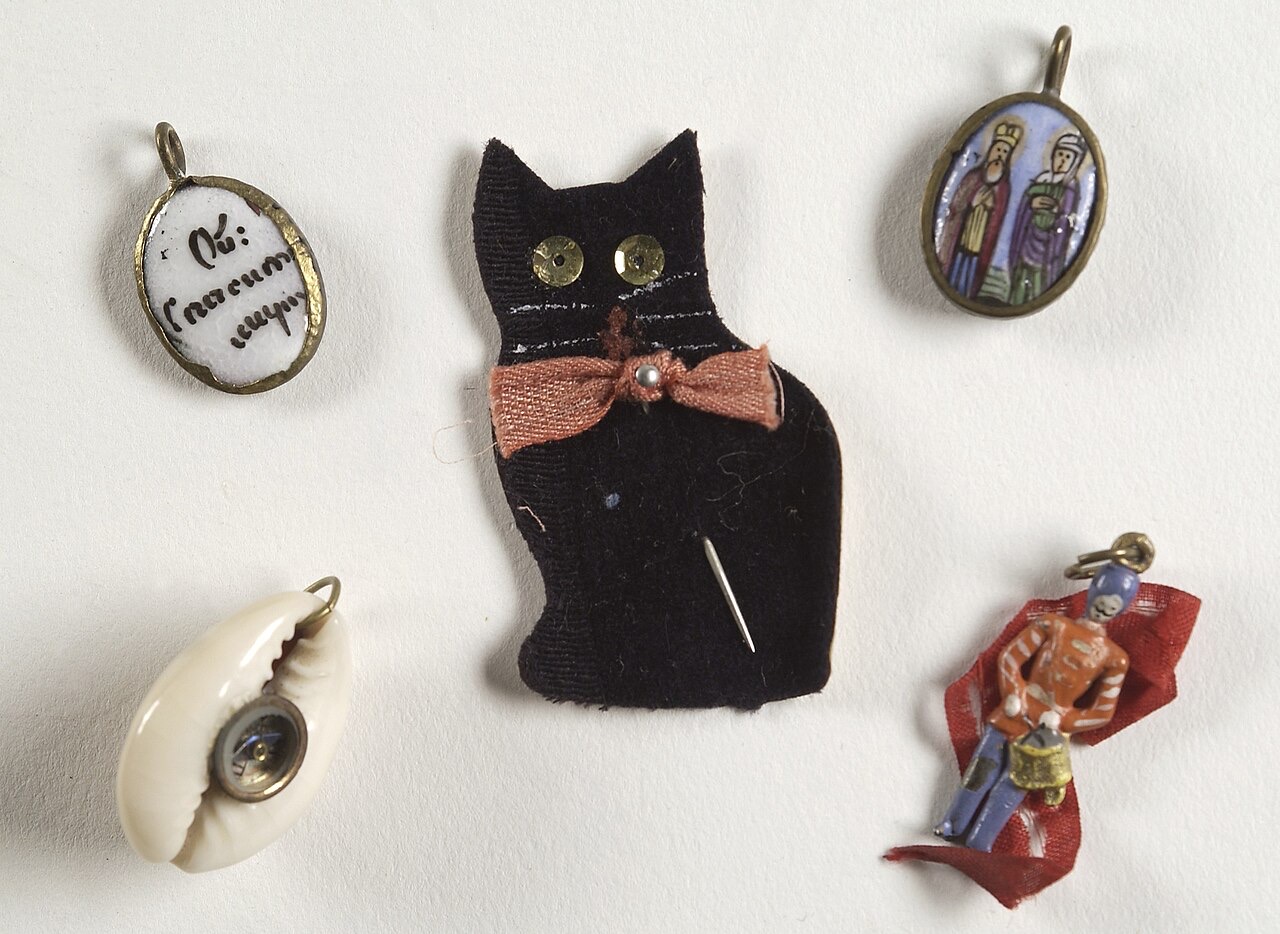
Soldiers have always carried them, and not because soldiers are credulous. Under fire a mind needs one fixed point, and an object in the pocket is one. Here is how to make a trigger object of your own.
- 1
Choose one object
A ring, a stone, a talisman, the planchette itself, or an old piece with a history, a medal or a key, of the kind Gosla Antiques & Collectibles keeps. Small enough to carry, particular enough that nothing else feels like it.
- 2
Give it one job
Hold it, wear it or touch it only when you are doing the work, the Rite, the pendulum, the breathing, and never otherwise.
- 3
Charge it with repetition
Not with belief. Thirty days of it present at every session will do what no blessing can: make it the cue for the state.
- 4
Use it
After the month, touching it will begin to bring the state with it: the stillness, the attention, the readiness. That is the talisman working. You built it.
Part Three
The Machines
What technology adds to the mind, and what it only claims to.
XIThe Link
Neuralink: what it has done, what it hopes to do, and what it has not yet shown.
The top rung of the ladder has a company’s name on it. Neuralink did not invent telekinesis by wire. Academic laboratories had people moving cursors by thought in 2006, and a robot arm in 2012. What it brought was money, a founder who promises the future out loud, a robot surgeon, and a device built to be sealed under the skin and carried home rather than wired to a laboratory rack. Whatever you think of the man, it is the most ambitious attempt yet to turn the oldest dream on this page into something a hospital can install.
The device
The implant, called the N1 or the Link, is a sealed disc about the size of a coin, set into a hole cut in the skull so that it sits flush with the bone. From its underside run the threads, sixty-four in the first version, each carrying sixteen electrodes, each far finer than a human hair and too delicate to be placed by hand. A surgical robot, the R1, places them: it watches the brain’s surface through five camera systems and an optical scanner and inserts each thread with a needle thinner than a hair, steering around the blood vessels. The battery charges wirelessly through the scalp, and the signals leave by radio. Nothing passes through the skin.
What it reads is the motor cortex, the strip of brain that plans movement. The user imagines moving a hand, or a finger, and software learns which patterns of firing mean which movement, and turns them into a cursor’s motion or a click. That is worth pausing on, because it is the ideo-motor action of the first half of this page, read directly at its source. The participants who type fastest do it by imagining finger movements on a keyboard they cannot touch, exactly as Ranganathan’s volunteers imagined pushing with fingers they never moved.
The progress, in order
- 2016
The founding
Elon Musk founds Neuralink in San Francisco with a small group of neuroscientists and engineers. Most of the founders have since left; one, Max Hodak, went on to found Science Corporation, whose retinal implant appears below.
- 2017
Consensual telepathy
In a long interview for the blog Wait But Why, Musk sets out the company’s reason for being: speech and typing are a slow, compressed channel, and a direct link would let minds share whole concepts. He later said he had meant conceptual telepathy, and that it would of course be consensual.
Wait But Why, 2017 - 2019
Threads and a sewing machine
The public reveal: flexible electrode threads far finer than earlier arrays, and a robot that sews them into the cortex while avoiding blood vessels.
- 2020
Gertrude
A pig with a coin-sized implant is shown on a livestream, her snout’s neurons firing as she sniffs for food.
- 2021
Pager plays Pong
A macaque named Pager plays a video game by thought alone, after learning it with a joystick that is then disconnected.
- 2022
The animal record
Reuters reports, on the word of current and former staff, that roughly 1,500 animals had died in the company’s experiments since 2018, and that a federal inspector general was investigating. The company had passed its USDA inspections; the count itself is a rough one.
Reuters, December 2022 - 2023
The trial approved
After an earlier application was turned back, the FDA allows a first human study, named PRIME.
- 28 Jan 2024
Noland Arbaugh
Paralysed from the shoulders down in a diving accident, he receives the first implant, and within weeks is playing chess and staying up all night at Civilization by thought. Then some of the threads pull back out of his brain and his control fades; the company rewrites its decoding software and his speed recovers and passes where it began.
- 2024
Alex, and the robot arm
The second participant designs parts in professional CAD software and plays shooters. In November a new study, CONVOY, begins connecting the implant to a robotic arm. In September the vision device, Blindsight, receives the FDA’s Breakthrough Device designation.
- 2025
Brad Smith speaks
The third participant, who has ALS and cannot speak, edits and narrates a video entirely through the implant, in an AI copy of the voice he lost, choosing among replies suggested by a chatbot.
- 2025
Abroad
Implants are performed in Toronto, Abu Dhabi and London. In May speech restoration receives its own Breakthrough designation; in June the company raises $650 million and lays out a three-year roadmap; in October the speech study, VOICE, opens with a stated goal of 140 words a minute.
- Jan 2026
Twenty-one Neuralnauts
The company counts twenty-one participants. Among them, a medical student who studies with his implant up to seventeen hours a day; the first woman, who makes digital art; and Nick Wray, who has ALS and passed ten bits per second in his first week, then fed himself with a robot arm.
Neuralink, January 2026 - 2026
Thought into voice
Participants in the VOICE study, people with ALS, are shown on video turning silently intended words into speech in a synthetic copy of their own voices. These are demonstrations, not yet published results.
as reported, March and September 2026 - 1 Oct 2026
A foundation model for the motor cortex
Decoders pre-trained on 50,000 hours of neural recordings lift the record to 11.32 bits per second and cut weekly recalibration for some users from about fifty-five minutes to about ten. A model trained on one participant, transferred to another, beat his own decoder.
Neuralink, October 2026
The hopes
These are the company’s stated ambitions and its founder’s, reported as ambitions. Some have dates attached; the dates have a way of moving.
Digital independence
The first product: control of a phone or computer by imagined movement, for people who cannot move. Then speed, until thought outruns the hand.
Speech restored
Words decoded from the speech areas and spoken in the person’s own reconstructed voice, at the pace of conversation: 140 words a minute is the stated goal.
Sight without eyes
A camera feeding patterns of stimulation straight into the visual cortex. Musk has said it will begin crude, like early video-game graphics, and might one day exceed natural vision, reaching wavelengths such as infrared and ultraviolet.
The deep brain
Electrodes reaching below the cortex, aimed at conditions such as Parkinson’s disease and depression, where the company says animal work has begun.
The body returned
Robotic arms and wheelchairs driven by thought now; in the longer term, a bridge from the brain to stimulators below a spinal injury.
Symbiosis
Many implants reading and writing anywhere in the brain, and the founder’s oldest stated aim: to keep human minds in the loop as artificial intelligence grows, by giving them a wider channel to it.
The doubts
A guide owes you these. Neuralink has reported its human results mainly through its own blog posts, videos and livestreams rather than peer-reviewed papers, so its numbers cannot yet be checked the way BrainGate’s can. Its first patient’s threads pulled out within weeks. The animal record drew a federal inquiry. Its timelines slip: the first human Blindsight implant was promised for 2025 and, as of this autumn, is still awaiting approval. And on raw performance it is in a race, not running alone, as the next table shows. None of that makes the achievement small. A paralysed man playing chess all night by thought is not small. It makes it unfinished.
The others in the race
| Who | How | Where it stands, autumn 2026 |
|---|---|---|
| Blackrock Neurotech · BrainGate | Rigid “Utah” arrays pushed into the cortex | The longest human record in the field, since 2004. In March 2026 BrainGate participants typed at up to 110 characters a minute by attempted finger movements, at home, in a peer-reviewed paper. |
| Synchron | A stent-electrode threaded up a blood vessel; no open-brain surgery | About ten people implanted in the US and Australia. In 2025 a participant with ALS drove an iPad natively by thought, through Apple’s new brain-interface input standard. |
| Paradromics | A high-channel implant for speech | A first temporary implant in May 2025; its long-term trial, Connect-One, approved in November 2025; the first long-term implant, in a woman with motor neuron disease, in Michigan in June 2026. |
| Precision Neuroscience | A film thinner than a hair laid on the surface of the brain | FDA-cleared in 2025 for temporary use of up to thirty days, during brain surgery and monitoring. |
| Science Corp. | PRIMA, a chip under the retina, lit by glasses | In a 38-patient trial in the New England Journal of Medicine (October 2025), most people blinded by macular degeneration could read letters and words again. |
| Neuracle (China) | NEO, electrodes resting on the brain’s outer membrane, with a robotic glove | Approved for sale in China on 13 March 2026: the first brain implant cleared for commercial use anywhere. |
| Meta | A wristband that reads the muscles’ electrical signals; no surgery | In a 2025 Nature paper, wearers wrote by hand in the air at about 21 words a minute. It now ships with Meta’s display glasses. |
The fastest typists with a chip in the brain type by imagining their fingers move. The alphabet the hand learned is still there, waiting to be read.
What this means for you
Unless you are paralysed, you will not be getting one, and you should not want one: this is brain surgery, offered so far only to people with no better option. But you already own the thing it reads. Every result in this section rests on the motor cortex keeping its map of the hand and the alphabet for years after the hand stops moving. That map is what the Daylight Rite trains.
XIIMachines for the Mind
Flicker, beat and current: devices that change the mind from outside, and what each actually does.
Everything so far has trained the mind from within. This section is about the other approach, as old as the strobe: a machine that reaches the brain through the eyes, the ears or the scalp and pushes. Some of these machines are hospital medicine. Some are art. Some are frauds that have killed people. They are sold side by side, often in the same catalogue, and the purpose of this section is to let you tell them apart.
The blinking glasses
- 1953the spectacle
The flicker
The neurophysiologist W. Grey Walter, in The Living Brain, describes how a strobe flashing near the brain’s own alpha rhythm, about eight to thirteen times a second, makes people with closed eyes see vivid moving patterns and colours that are not there.
Walter, The Living Brain, 1953 - 1958the spectacle
A bus in Provence
The painter Brion Gysin, riding through an avenue of trees with the low sun flickering through them, sees a storm of colour behind his closed eyelids. He finds the explanation in Walter’s book.
Gysin’s journal, 21 December 1958 - 1961the spectacle
The Dreamachine
With the engineer Ian Sommerville, Gysin builds a slotted paper cylinder that turns on a record player around a light bulb, throwing flicker at the alpha frequency onto closed eyes. It is patented in 1961 and becomes a fixture of the Beat Hotel and the decade that followed.
patent of 18 July 1961 - 1980sthe con
The mind machine
Goggles lined with flashing lights, synchronised to tones in headphones, are sold as “light and sound machines” promising instant meditation, accelerated learning and the brain of a monk. The claims outran every study.
- 2010sthe spectacle
The lamp and the app
The flicker goes upmarket and then into the pocket: hypnagogic lamps for clinics and spas, and phone apps that strobe the camera light into closed eyes. In 2022 a new Dreamachine toured Britain as a public art work, with the neuroscientist Anil Seth gathering what thousands of people saw.
What the flicker does is real and strange. Light pulsing at roughly the brain’s alpha rhythm drives the visual cortex into patterns of its own, and the patterns are seen: kaleidoscopes, tunnels, colours with no names. It is one of the clearest demonstrations on this page that what you see is made inside you. What it does not do, on any good evidence, is make you calmer, cleverer or more spiritual for longer than the session. Use it as an experience, not a treatment.
A warning that matters
About one person in four thousand has photosensitive epilepsy, and many do not know it until a flicker finds it. On 16 December 1997 an episode of a Japanese cartoon with a flashing red-and-blue sequence sent hundreds of children to hospital. If you or anyone in your family has had a seizure, do not use flicker devices.
Forty hertz
The most serious science in this corner began in 2016, when Li-Huei Tsai’s laboratory at MIT showed in Nature that light flickering forty times a second, in the brain’s gamma range, reduced the amyloid plaques of Alzheimer’s disease in mice. Sound clicking at forty hertz added to the effect; in 2024 the same group reported that the stimulation helps the brain’s own drainage system wash waste away. A company, Cognito Therapeutics, built a headset of light and sound, received the FDA’s Breakthrough designation, and enrolled 670 people with Alzheimer’s at seventy sites in a year-long blinded trial against a sham device. Its results are the ones to watch. Until they arrive, this is a hope with a mechanism, not a treatment.
Sound therapy
In 1839 the physicist Heinrich Dove noticed that two tones of slightly different pitch, one in each ear, are heard as a third thing that neither ear receives: a slow beat, created inside the head. In 1973 the biophysicist Gerald Oster described these binaural beats in Scientific American, and the author Robert Monroe built a business on them, selling recordings meant to lead the listener into meditation, sleep and out-of-body travel. Modern apps sell beats for every state of mind.
The evidence is a split decision. A 2019 meta-analysis of twenty-two studies found a moderate overall benefit for anxiety, pain, memory and attention. A 2023 review asked whether the brain actually falls into step with the beat, which is the whole theory, and found five studies that said yes, eight that said no and one that could not decide. My reading: beats can help, and the honest reason may be that a familiar sound, used every time you sit to work, becomes a trigger for the state. That is a trigger object you wear in your ears.
Beware the numerology that has grown around sound. The “solfeggio frequencies”, 528 hertz said to repair DNA and the rest, and the claim that music tuned to 432 hertz is more natural than 440, have no evidence behind them. What does have evidence is quieter: soft pulses of pink noise timed to the slow waves of deep sleep deepened that sleep and improved memory the next morning in laboratory studies; and music therapy is used in hospitals, notably to help stroke patients who cannot speak learn to sing their words back.
The current
Electricity applied to the head has a long and disreputable history, which the next section tells, and a short, respectable present. Transcranial magnetic stimulation, coils that induce currents in the cortex through the skull, has been cleared for depression since 2008 and is now a hospital routine; an accelerated five-day version brought most patients in a small 2022 trial into remission. Transcranial direct current stimulation, a weak current through scalp electrodes, crossed a line in December 2025 when the FDA approved Flow Neuroscience’s headset as the first brain stimulator for depression to be used at home, on prescription. The evidence for tDCS in general is mixed; a large 2023 trial in The Lancet found it no better than a sham. And the home-built kind, a nine-volt battery and two sponges, burns skin. Do not build one.
The Rife machine
Royal Raymond Rife (1888–1971) was a gifted builder of microscopes in San Diego who came to believe two extraordinary things: that his instruments could show living viruses at magnifications no optical microscope can reach, and that every microbe has a “mortal oscillatory rate”, a radio frequency at which it shatters, as a wine glass shatters at a note. In 1934 a physician, Milbank Johnson, set up a clinic at Scripps Ranch to treat sixteen terminally ill cancer patients with Rife’s beam ray, and cures were claimed; no reliable records survive. The beam ray was sold to clinics, fell into lawsuits, and was abandoned. Rife died obscure.
He was revived in 1987 by Barry Lynes’s book The Cancer Cure That Worked, and the “Rife machine”, now usually a frequency generator with electrodes held in the hands, has been sold ever since for cancer, Lyme disease and nearly everything else. No health regulator anywhere has approved one, and no credible study supports them. People have died using them instead of treatment: in Washington State, a 32-year-old man with testicular cancer, a highly curable disease, declined surgery, spent a year on a Rife device, and died in December 2004; the clinic owners who sold it to him were convicted of fraud. Similar deaths, including a child’s, have been reported in Australia and New Zealand.
I include Rife because his story contains this whole page in miniature. His microscopes were real craftsmanship. His frequencies were real electricity. His patients’ hope was real, and so was the relief some of them felt. What was false was the claim, and the only way anyone could have known it was false was the one thing his machine was never given: a fair test against a sham. The history of that test comes next.
The machines, side by side
| Device | What it does | Best evidence | Caution | Grade |
|---|---|---|---|---|
| Light and sound goggles | Flashing lights over closed eyes, with tones in headphones | Vivid patterns and colour, deep relaxation in many users | Little evidence for lasting change; not for anyone with photosensitive epilepsy | C |
| 40 Hz light and sound | Flicker and clicks forty times a second, an hour a day | Cleared amyloid and protected neurons in mice; a 670-person human trial (HOPE) awaits results | Investigational; not yet proven in people | In trial |
| Binaural beats | Two tones, slightly apart, one in each ear; the brain hears the difference as a beat | Small-to-moderate effects on anxiety, pain and memory in a 2019 meta-analysis | The brain does not reliably follow the beat (2023 review) | C |
| Pink noise in deep sleep | Soft pulses of sound timed to the brain’s slow waves during sleep | Deepened slow-wave sleep and improved next-day recall in laboratory studies | Needs sleep EEG to time it; consumer headbands vary | C+ |
| tDCS | Weak direct current (0.5–2 mA) through the scalp | The Flow FL-100 won FDA approval for depression at home in December 2025 | Mixed evidence overall; a large 2023 trial found no benefit over sham; DIY devices burn skin | B− (depression) |
| Cranial electrotherapy | Tiny alternating currents through ear-clips | Cleared in the US for anxiety and insomnia (e.g. Alpha-Stim) | Reviewers call the evidence thin | C |
| TMS | Magnetic pulses through the skull from a coil | FDA-cleared for depression since 2008; a five-day accelerated protocol (SAINT) brought remission to most of a small 2022 trial | Clinic only; rare seizures | A (depression) |
| Neurofeedback | Watching your own EEG and learning to change it | Real learning of brain rhythms; modest clinical effects | Hard to separate from placebo in trials | C |
| Rife machines | Radio frequencies said to shatter microbes at their “mortal oscillatory rate” | None | No credible evidence; deaths when used instead of treatment | F |
Grades are my summary of the human evidence: A, consistent trials and regulatory approval for a condition; B, several good trials with modest effects; C, small or conflicting studies; F, no credible evidence and documented harm.
XIIIThe Quack and the Cure
Electricity in medicine from the torpedo fish to the operating theatre, and the test that told them apart.
For two and a half centuries the same current has been sold by charlatans and used by surgeons. The electric belt and the TENS unit run on the same principle. The violet-ray wand and the electrosurgical knife descend from the same coil of Nikola Tesla’s. Mesmer’s magnetic sessions and the modern magnetic stimulator both act on the brain. What separated the con from the cure was never the electricity. It was the test, and the test, beautifully, was invented to catch a man who claimed his power came from outside the patient.
Read the record below with that in mind. I have marked each entry: the con, the cure, the test, and the spectacle.
- AD 46
The torpedo fish
Scribonius Largus, physician to the Roman emperor Claudius, prescribes a live electric ray laid on the head for headache and under the feet for gout. It is the first electrical prescription on record, and the fish does deliver a shock.
Scribonius Largus, Compositiones - 1760
The Desideratum
Electrical machines that store a spark in a glass jar sweep Europe. John Wesley, the founder of Methodism, publishes a book recommending shocks for dozens of ailments and treats the poor of London for free.
Wesley, The Desideratum, 1760 - 1774the con
Animal magnetism
Franz Anton Mesmer, in Vienna and then Paris, claims an invisible fluid flows through all living things, and cures his patients by redirecting it with magnets, then with his hands, in sessions that end in convulsions. Paris adores him.
- 1781the con
The Celestial Bed
In London James Graham opens a Temple of Health where, for fifty pounds a night, couples hoping for a child may sleep on a bed charged with electricity and magnetism under a mirrored canopy.
- 1784the test
The first blind trial
The King of France appoints a commission that includes Benjamin Franklin and Antoine Lavoisier. They blindfold the subjects: told they are being magnetised when they are not, people convulse; magnetised without knowing it, they feel nothing. The commission concludes that the effects are real and that their cause is the imagination. The method they used, hiding from the subject what is being done, is the foundation of modern medicine.
Report of the Royal Commission, 1784 - 1796the con
Perkins’s tractors
An American physician, Elisha Perkins, patents a pair of metal rods to be drawn over the skin, said to pull disease out electrically. They sell for five guineas.
US patent, 1796 - 1799the test
Wooden tractors
In Bath, John Haygarth makes imitation tractors of painted wood and uses them on patients without telling them. They work exactly as well as the metal ones. He publishes his result as a lesson in the power of the imagination: an early placebo-controlled trial.
Haygarth, Of the Imagination, 1800 - 1803the spectacle
The galvanised corpse
Giovanni Aldini, Galvani’s nephew, applies a large battery to the body of George Forster, just hanged at Newgate, before a London audience. The jaw quivers, an eye opens, a fist clenches. Fifteen years later Mary Shelley publishes Frankenstein.
- 1850–1910the con
The electric belt
Pulvermacher’s chains, Dr Sanden’s belt, and in the 1902 Sears catalogue the Heidelberg Electric Belt, eighteen dollars, with an attachment for “weak men”. Mild currents, sold for exhaustion, nerves and impotence. They did nothing a belief could not do.
- 1891the spectacle
Tesla’s discovery
Nikola Tesla finds that current alternating hundreds of thousands of times a second can pass over the human body without pain or injury, because at those frequencies it travels along the skin rather than through the heart. He lights lamps held in his hands with it.
Tesla, 1891 lectures - 1893the spectacle
The World’s Fair
At the World’s Columbian Exposition in Chicago, Westinghouse lights the fair with Tesla’s alternating current, and Tesla’s own exhibit draws crowds to see him, in the press’s phrase, defy a million volts from one of his great coils, the high-frequency discharges roaring round him while he stands unhurt. America learns that electricity can be beautiful and does not have to kill.
Chicago, 1893 - 1898the cure
Tesla’s therapy paper
In Buffalo Tesla lectures to the electro-therapeutic physicians on high-frequency oscillators for medical use: warming the tissues, and a sense of well-being in patients. In Paris Arsène d’Arsonval is already treating patients with the same currents.
Tesla, High Frequency Oscillators for Electro-Therapeutic and Other Purposes, 1898 - 1900–1951the con
The violet ray
A small Tesla coil in a hand-held wand, with glass electrodes that glow violet and crackle on the skin, sold door to door and by mail by makers such as Renulife and Master Electric for fatigue, catarrh, baldness, rheumatism and brain fog. In 1951 the FDA moved against the last American maker and seized its devices. Its descendant still hums in beauty salons as the “high-frequency facial wand”.
- 1920sthe cure
Diathermy
Meanwhile, in the hospitals, the same high-frequency current, aimed and measured, becomes diathermy: deep heating of muscles and joints. Shortwave diathermy is still in physiotherapy today.
- 1924the test
Abrams’s box
Albert Abrams claims to diagnose any disease from a drop of blood in a box of wires, and to cure it with his Oscilloclast; thousands of practitioners lease his machines. Scientific American investigates in twelve reports. An Abrams practitioner is given six sealed specimens to identify and gets all six wrong.
Scientific American, 1924 - 1926the cure
The Bovie
The physicist William T. Bovie builds a high-frequency generator that cuts tissue and seals blood vessels at once. On 1 October 1926 the neurosurgeon Harvey Cushing uses it to remove a brain tumour he had been unable to remove because of bleeding. Surgeons still call electrosurgery “the Bovie”, and there is one in almost every operating theatre on earth.
Boston, 1926 - 1930sthe con
The beam ray
Royal Rife’s frequency machine, told above.
- 1938the cure
Electroconvulsive therapy
Ugo Cerletti and Lucio Bini in Rome induce a controlled seizure with current. Misused for decades, it is now given under anaesthesia and remains the most effective treatment known for the most severe depression.
- 1947the cure
The heart restarted
Claude Beck in Cleveland shocks the fibrillating heart of a fourteen-year-old boy back into rhythm during surgery: the first human defibrillation. Today defibrillators hang in airports.
- 1954the con
The orgone box
The FDA obtains an injunction against Wilhelm Reich’s orgone accumulators, wooden cabinets said to concentrate a cosmic life energy. He defies it, and dies in a federal prison in 1957.
- 1958the cure
The pacemaker
In Stockholm Arne Larsson, dying of a failing heartbeat, receives the first implanted pacemaker. He outlives both the surgeon and the engineer who made it, goes through twenty-six devices, and dies at eighty-six.
- 1965–1985the cure
Stimulation grows up
The gate-control theory of pain (1965) leads to the TENS unit; spinal cord stimulators follow in 1967; the cochlear implant is approved in 1984; Anthony Barker demonstrates magnetic stimulation of the brain in Sheffield in 1985.
- 1990sthe con
The zapper
A naturopath, Hulda Clark, sells a nine-volt “zapper” said to kill every parasite and cure every cancer. It joins the Rife machine on the internet, where both are sold today.
- 1997–2025the cure
Electricity as medicine
Deep brain stimulation for tremor (1997) and Parkinson’s (2002); vagus nerve stimulation for epilepsy (1997) and depression (2005); TMS for depression (2008); a tongue-nerve stimulator for sleep apnoea and a forehead stimulator for migraine (2014); vagus stimulation for stroke rehabilitation (2021); tDCS for depression at home (2025).
The electricity was never the difference. The test was.
Tesla’s coil, three ways
Follow one invention through all three doors. Tesla’s high-frequency coil, demonstrated to amazed crowds in 1891 and at the Chicago World’s Fair of 1893, went in three directions at once. Into the parlour, as the violet ray, sold for everything from baldness to brain fog until the government seized it. Into the hospital, as d’Arsonval’s diathermy and then Bovie’s electrosurgical knife, which made modern brain surgery possible. And into physics, as the unit that bears his name, in which every MRI scanner’s field is measured. Same coil. Same current. The difference was what was claimed for it, and whether anyone checked.
Electrostimulation in the hospital today
The electrosurgical unit
Tesla’s high-frequency current, made to cut and seal. Still nicknamed after the physicist Bovie.
The defibrillator
A measured shock that resets a fibrillating heart; now automatic, and on the wall of the gym.
Pacemakers and implanted defibrillators
Pulses on demand, from a device the size of a coin; around a million implanted every year.
TENS and muscle stimulation
The electric belt made honest: currents that block pain signals, or keep wasting muscles working in intensive care.
ECT and TMS
A controlled seizure under anaesthesia, and magnetic pulses without one, for depression that nothing else has touched.
Deep brain and vagus stimulators
Implanted pacemakers for the brain and the vagus nerve, quieting tremor and seizures.
The cochlear implant
Electrodes in the inner ear, read as sound by the brain: the most successful brain-machine interface ever made.
MRI, measured in teslas
The scanner’s magnetic field is measured in the unit named for him in 1960; a hospital scanner runs at 1.5 or 3 teslas.
Six signs of a quack device
- It treats nearly everything. Real treatments treat something.
- Its mechanism is secret, cosmic, or suppressed by “them”.
- Its evidence is testimonials rather than trials against a sham.
- It has never been tested blind, or it failed when it was.
- It asks you to stop or delay the treatment your doctor recommends.
- It is cleared, if at all, for something other than what it is being sold for.
And notice what Franklin’s commission actually found in 1784. Mesmer’s patients really did convulse, faint and recover. The commissioners did not say nothing happened. They said that what happened was produced by the patients’ own imagination, and that no fluid from outside was needed. Two hundred and forty years later, that is still the most important sentence on this page.
XIVThe Bionic Ear
Hearing aids as the first consumer bionics, what is on sale, and what super-hearing honestly means.
The most successful brain-computer interface ever built is not a chip in the motor cortex. It is the cochlear implant: a string of electrodes threaded into the spiral of the inner ear, speaking to the auditory nerve in pulses the brain learns to hear as voices and music. The first multi-channel implant went into a patient in Melbourne in 1978; well over a million have been implanted since; and in July 2025 the FDA approved the first “smart” one, Cochlear’s Nucleus Nexa, whose firmware can be upgraded inside the head. Every person with one is living proof of this page’s thesis: the brain accepts a wholly artificial signal and, with months of practice, makes it into hearing.
Hearing aids have followed the implant into bionics. The best of them now carry dedicated artificial-intelligence chips, motion sensors, translation, fall detection and wireless streaming, and since October 2022 Americans with mild to moderate loss can buy them over the counter without a prescription. They matter for the mind, too. In 2024 the Lancet Commission on dementia named untreated hearing loss the largest modifiable risk factor in midlife, behind about seven per cent of cases. The ACHIEVE trial of 2023 found that, across all its older adults, hearing aids did not significantly slow cognitive decline over three years, but in the group most at risk they slowed it by nearly half. If you are over fifty, the most powerful brain supplement in this whole site may be a hearing test.
The flagship hearing aids, autumn 2026
| Model | Maker | What makes it bionic | Independent standing |
|---|---|---|---|
| Phonak Audéo Sphere (Infinio, 2024; EON, 2026) | Sonova | A dedicated AI chip that separates voices from noise in real time | The highest speech-in-noise score the independent lab HearAdvisor had recorded |
| Starkey Omega AI (2025) | Starkey | AI sound processing, fall detection, health tracking, translation in the app | Near the top of HearAdvisor’s lab rankings; highest features score in NCOA’s testing |
| Oticon Intent (2024); Reveal (2026) | Demant | Motion sensors read head and body movement to guess whom you are listening to | Ranked first in one data-driven 2026 ranking |
| Signia IX; Pure Charge&Go MaX (2026) | WS Audiology | Tracks several talkers at once in group conversation | Among the 2026 flagship comparisons |
| ReSound Vivia (2025); Sensia (2026) | GN | AI noise reduction in a very small rechargeable body | Among the 2026 flagship comparisons |
| Widex Allure (2025); Allure AI (2026) | WS Audiology | Widex’s natural-sound processing with AI programmes | Among the 2026 flagship comparisons |
Prescription aids are fitted by an audiologist, usually cost several thousand dollars a pair, and suit every degree of loss short of the profound. For independent lab scores, look up HearAdvisor rather than the maker’s brochure.
Over the counter
| Product | What it is | For whom |
|---|---|---|
| Apple AirPods Pro 2 and 3 | Earbuds with an FDA-authorised Hearing Aid feature (September 2024), a hearing test in the iPhone, Conversation Boost, and live translation | Mild to moderate loss; adults; needs an iPhone |
| Nuance Audio (2025); Nuance Audio Plus (2026) | Hearing aids hidden in the arms of glasses: a beamforming microphone array aims at the face in front of you; FDA-cleared | About $1,100 at launch; the Plus from $829 |
| Sony CRE series | OTC hearing aids made with a hearing-aid manufacturer; app fitting | Mild to moderate loss |
| Sennheiser All-Day Clear, Jabra Enhance, Eargo, Elehear | Self-fitting OTC aids from audio brands | Mild to moderate loss; check current models |
Super-hearing, honestly
No device you can wear will give you a dog’s range or an owl’s precision, and a hearing aid turned up loud enough to hear through walls would damage your ears. What exists is better described as a set of senses added on: each one does one thing the unaided ear cannot.
An ear across the room
A small microphone placed on a lecture podium or a restaurant table streams straight to your aids: Phonak’s Roger, or an iPhone’s Live Listen sending to AirPods. Distance and noise simply vanish.
One voice out of a roar
Arrays of microphones aim at the face you are looking at, and neural networks peel speech away from clatter. In a loud room the best of them now outperform the unaided ear.
The hunter’s ears
Shooting earmuffs and earbuds that amplify soft sounds, a footstep, a twig, a whisper, and clamp shut in a thousandth of a second when a gun fires. The nearest thing on sale to a predator’s hearing.
Every language
Earbuds that translate speech as it arrives, now built into AirPods and Pixel Buds. Babel, reversed, in the ear canal.
Beyond the human range
Ultrasonic microphones that plug into a phone, such as the Echo Meter Touch, and shift bats’ calls down into hearing range. On a summer evening the silent air turns out to be full of voices.
Under the water
Underwater microphones bring whale song and the clicks of shrimp into headphones on any boat.
Naming what you hear
Free apps such as Cornell’s Merlin name birds by their song as they sing. A week with one, and you begin to know them without it.
The free option
Echolocation, from the ten-week course described under Upbringing, and the musician’s ear. The bionic devices amplify; training refines.
How to choose
- Get tested: an app test is a start, an audiologist’s test is the answer.
- Mild to moderate loss: try AirPods Pro or an OTC aid first. Severe: a prescription aid. Profound, or aids no longer help: ask about a cochlear implant evaluation.
- Want: rechargeable, Bluetooth LE Audio and Auracast for the coming public broadcast systems, a remote microphone, and water resistance.
- Judge by independent lab scores, a trial period, and how speech in a noisy room sounds to you.
- Amplifying devices can damage hearing too. Keep volumes sane, and know that recording other people’s conversations is illegal in many places.
XVThe Second Sight
Smart glasses, seeing glasses, and glasses that hear: what exists in autumn 2026.
Glasses are becoming the place where the machine meets the face. In a decade they have gone from Google Glass, a famous failure, to frames that look like Ray-Bans and carry a camera, five microphones, speakers and an artificial intelligence you can ask about what you are looking at. The newest put a display inside one lens and take their commands not from your voice but from your wrist, where a band reads the electrical signals your muscles produce when you intend to move a finger: the non-surgical cousin of everything in the Neuralink section, published in Nature in 2025, with wearers writing in the air at about twenty-one words a minute.
Smart glasses
| Glasses | Kind | What they do | Price |
|---|---|---|---|
| Ray-Ban Meta and Oakley Meta | Camera and AI, no display | A camera, open-ear speakers and an AI you can ask about what you see; live translation; hands-free photos and calls; Be My Eyes for blind users | From about $299 |
| Meta Ray-Ban Display (2025) | Full-colour display in one lens, with the Meta Neural Band | Messages, maps, captions and translation in a small display; the wristband reads the muscles’ electrical signals so you can click, scroll and write without touching anything | $799 with the band |
| Even Realities G2 | Text display, no camera | Teleprompter, translation, navigation and notes in a quiet green display, in frames that pass for ordinary glasses | About $599 |
| Android XR glasses (Samsung, with Warby Parker and Gentle Monster) | Google’s AI in fashion frames | Gemini that sees and hears; previewed at Google I/O 2026 | Announced for 2026 |
| XREAL One Pro; Project Aura | Display glasses that mirror a screen; Aura runs Android XR with a 70° view on a pocket computer | A private cinema or a giant monitor in a pair of sunglasses | Aura due later in 2026 |
| Snap Specs | Standalone see-through augmented reality | Graphics laid over the world with no phone needed | Announced for 2026 |
| Apple Vision Pro | A headset, not glasses | The most capable mixed-reality display on sale; Apple has announced no glasses | From $3,499 |
For the purposes of this site, the camera-and-AI glasses are the interesting ones. They are, in plain terms, a second memory and a second pair of eyes: they can read a menu in a language you do not speak, remember where you put the car, identify a plant, and describe a room to someone who cannot see it. Meta has pledged a pair to every legally blind veteran in the United States. They are also cameras on people’s faces, which is a responsibility: there is a light that shows when they record, and many places and people do not want to be recorded.
Glasses that give sight back
| Device | For | What it does | Price |
|---|---|---|---|
| eSight Go | Low vision (macular degeneration, diabetic retinopathy, Stargardt) | A camera feeds magnified, contrast-boosted video to screens before the eyes | About $4,950 |
| OrCam MyEye 3 Pro | Blind or low vision | Clips to any frame; reads text aloud, recognises faces and products | Roughly $3,700–4,500 |
| Envision Glasses | Blind or low vision | AI description of scenes, text and people, and calls to a sighted helper | About $2,499 |
| Ray-Ban Meta with Be My Eyes | Blind or low vision | A general camera-and-AI pair that describes the world and connects to volunteers; not designed for accessibility, but widely used for it | From about $299 |
| Nuance Audio | Hearing, not sight | Hearing aids in the frame, for those who would rather wear glasses than earpieces | From $829 |
Prices are approximate list prices in late 2026, and many of these devices can be funded through veterans’ or vocational-rehabilitation programmes.
Beyond human sight
Seeing heat
Phone attachments and pocket monoculars show warmth as light: animals in a black field, a cold spot in a wall, the warm handprint left on a door. The infrared that Blindsight promises one day, available now in the hand.
Seeing in the dark
Sensors that amplify starlight and near-infrared, sold to hunters and naturalists.
More colour, for some
Filters such as EnChroma help some people with red-green colour blindness tell certain colours apart better. Tests show they do not restore normal colour vision; ignore any advertisement that says otherwise.
The free option
The Moken children, and the European children who caught them up in a month. Practice changes what eyes can do.
How to choose
- Decide what you want: a second memory (camera glasses), a private screen (display glasses), sight assistance (eSight, OrCam, Envision), or hearing (Nuance).
- Check prescription-lens support before you buy; most smart glasses take them, some only within limits.
- Wear them in the shop if you can: weight on the nose decides everything after the first hour.
- Read the privacy settings, and keep the recording light visible.
Part Four
The Apothecary
What can be swallowed, what the evidence says, and what should never be.
XVIThe Apothecary
Nootropics: the types, the evidence, how to choose, how to begin, and the brands compared.
In 1972 the Romanian chemist Corneliu Giurgea, who had made a new molecule called piracetam at a Belgian drug company, needed a word for what he thought it did, and coined one from the Greek for mind and for turning: nootropic. He set strict conditions. A true nootropic should improve learning and memory, protect the brain, and have almost no side effects. Half a century later, by his standard, very few substances qualify, and a large industry sells hundreds of them anyway.
I will give you the whole map, because you asked for it complicated, but I will put the conclusion first. Nothing in a bottle beats sleep and exercise. After those, the substances with the best evidence are cheap and boring: caffeine with theanine, creatine, and for older people a multivitamin. The expensive stacks are mostly those cheap things plus a long list of ingredients at doses no trial used. And the only reliable way to know whether anything works for you is to test it on yourself, blind, against a placebo, which is the method of Franklin’s commission applied to your own kitchen.
A nootropic is a trigger object you swallow. Some of them also do something.
The types
Stimulants
Raise alertness and the willingness to work. In healthy people the prescription stimulants raise effort more than quality: in a 2023 study they made people work longer and solve problems worse.
Calming amino acids
Theanine smooths caffeine’s edge and, with it, sharpens attention switching. Tyrosine is a building block of dopamine; it may help under acute stress or cold.
Cellular energy
The brain’s quick-release energy store. Cheap, well studied, and the surprise of the last decade.
Ayurvedic herbs
A creeping marsh plant used in India for memory for centuries; the effect builds over two to three months.
Choline donors
Raw material for acetylcholine, the neurotransmitter of attention and memory. Evidence modest, best in older adults with complaints.
Adaptogens
Herbs said to help the body resist stress. Small trials, mixed results, real interactions.
Mushrooms
Fashionable; lion’s mane stimulates nerve growth factor in a dish; human evidence is thin.
Structural fats
The brain is largely fat. Supplementing helps those who are short of it, and little otherwise.
Vitamins and flavanols
Unglamorous and, in older adults or poor diets, among the better-supported options.
Racetams and peptides
The original “nootropics”, prescription drugs in some countries; in the US not lawful as supplements; weak evidence in healthy people.
The evidence, graded
| Substance | Type | Studied dose | What the best evidence shows | Grade | Cautions |
|---|---|---|---|---|---|
| Caffeine | Stimulant | 50–200 mg | Alertness, reaction time, sustained attention | A | Sleep, anxiety, palpitations; most adults should stay under 400 mg a day |
| L-theanine + caffeine | Amino acid | 100–200 mg with 50–100 mg caffeine | Attention switching, less jitter | B | Mild |
| Creatine monohydrate | Energy | 3–5 g daily | Memory (moderate certainty), processing speed (low), in a 2024 meta-analysis of 16 trials | B | Kidney disease: ask first |
| Bacopa monnieri | Herb | 300 mg extract daily, 12 weeks | Speed of attention (2014 meta-analysis of nine trials) | B− | Stomach upset; take with food; slow |
| Multivitamin (older adults) | Micronutrient | One daily | Slower memory decline in the COSMOS trials (2022–23) | B | Cheap; choose a tested brand |
| Cocoa flavanols | Polyphenol | About 500 mg flavanols daily | Memory, mainly in people with poor diets (2023) | C+ | An extract, not chocolate |
| Citicoline | Choline donor | 250–500 mg | Memory in older adults with complaints | C | Mild |
| Omega-3 | Fat | About 1 g EPA+DHA | Little effect unless deficient | C | Blood thinners |
| Rhodiola rosea | Adaptogen | 200–400 mg | Mental fatigue under stress (small trials) | C | Antidepressants: ask first |
| Ashwagandha | Adaptogen | 300–600 mg | Stress and sleep (small trials) | C | Rare liver injury; thyroid; Denmark moved to ban it from supplements in 2023 |
| Panax ginseng | Adaptogen | 200–400 mg | Mixed | C− | Diabetes drugs, warfarin |
| Alpha-GPC | Choline donor | 300–600 mg | Weak | C− | Linked to higher stroke risk in one large observational study (2021) |
| Lion’s mane | Mushroom | 1–3 g | A few small trials | D | Mild |
| Ginkgo biloba | Herb | 120–240 mg | Did not prevent dementia in 3,069 older adults (GEM trial, 2008) | D | Bleeding risk with blood thinners |
| Phosphatidylserine | Fat | 100–300 mg | The FDA allows only a claim it calls “very limited and preliminary” | D | Mild |
| Huperzine A | Enzyme blocker | 50–200 µg | Little in healthy people | D | Cholinergic side effects; never with Alzheimer’s drugs |
| Modafinil | Prescription | On prescription | Modest gains on complex tasks in rested people (2015 review) | Rx | Schedule IV; rashes, rarely serious |
| Methylphenidate, amphetamine | Prescription | On prescription | In people without ADHD: more effort, worse solutions (2023) | Rx | Schedule II; dependence; heart |
| Microdosed psychedelics | Illegal in most places | — | No better than placebo in a 2021 self-blinding study | — | Legal risk; unknown products |
A: consistent, well-replicated effect. B: several trials or a meta-analysis, modest effect. C: small or mixed studies. D: little good human evidence. Rx: a prescription drug, for a doctor to decide. Doses are those used in studies, given for orientation, not as a prescription.
How do I choose?
Choose a goal and tell the page what applies to you. It will suggest where the evidence says to start, and what to leave alone. It is a starting point for a conversation with your doctor or pharmacist, not a substitute for one, and it never suggests prescription drugs.
What do you want?
What applies to you?
How do I get on?
Here is the protocol, in twelve steps. It is more careful than most people bother with, which is exactly why it works.
- 1
Lay the foundation
Two weeks of seven to nine hours’ sleep and three brisk walks a week before anything in a bottle. Nothing on the shelf beats either.
- 2
Choose one goal
Focus, memory, calm or energy: one. The goal decides the substance, not the other way round.
- 3
Measure a baseline
For two weeks, the same short test at the same time each day: a reaction-time test, a digit span, an n-back, or your time for one full round of the practice board above. Write it down.
- 4
One substance at a time
Never start two things together, or you will never know which did what. Stacks are for later, if ever.
- 5
Start at the low end of the studied dose
The doses in the table above come from trials. Begin at the bottom of the range.
- 6
Know its clock
Caffeine works in thirty minutes; creatine in weeks; bacopa in twelve weeks. Judge each on its own clock.
- 7
Blind yourself
Have someone fill identical capsules, half with your substance and half with flour, and number them; log your scores; unmask at the end. A 2021 study of microdosers did exactly this and found the placebo capsules worked as well.
- 8
Keep a log
Dose, time, sleep, coffee, mood, test score. One line a day is enough.
- 9
Check for interactions
Show the list to a pharmacist before you start, every time. It costs nothing.
- 10
Buy tested
Look for NSF Certified for Sport, USP Verified, or Informed Choice on the label, or a lab certificate for the batch.
- 11
Know your stop rules
Worse sleep, a racing heart, a darkening mood, a rash, a stomach that will not settle: stop, and tell your doctor.
- 12
Decide, then wash out
At the end, keep only what beat the placebo in your own log. Take a break of a week or two from anything you keep, and test again.
How to read a label
The doses are hidden
The law lets a maker list a blend’s total weight without saying how much of each ingredient is inside. Assume the expensive ones are at the bottom.
The active part
Herbs vary; a good extract states what it is standardised to, such as bacosides in bacopa. No standardisation, no way to compare it with the trials.
Not the same thing
It means the ingredients have been studied somewhere, often at other doses. “Clinically studied product” is much rarer.
Read the small print
“These statements have not been evaluated by the Food and Drug Administration.” Under a 1994 law, supplements need no proof that they work before they are sold.
Tested, or not
NSF Certified for Sport, USP Verified and Informed Choice mean an outside laboratory checked that the bottle holds what it says and nothing it should not.
The real price
Four capsules a serving turns a sixty-capsule bottle into a fifteen-day supply. Work out the cost per day at the dose the trials used.
The brands compared
These are the best-known branded stacks, read against their own labels and records. Prices are rough monthly costs at the labelled dose in late 2026 and move often; formulas change too, so check the current label before you buy.
Mind Lab Pro
- What is in it
- 11 ingredients, every dose on the label: citicoline 250 mg, lion’s mane 500 mg, bacopa 150 mg, phosphatidylserine 100 mg, L-theanine 100 mg, N-acetyl-tyrosine 175 mg, rhodiola, pine bark, B6, B9, B12
- Caffeine
- None
- Trials of the product
- One published trial of the product: better immediate and delayed recall than placebo
- Legal record
- None found
- Cost
- About $69 a month
The most transparent of the stacks; bacopa at half the studied dose
Alpha BRAIN
- What is in it
- Proprietary blends hiding individual doses: cat’s claw, bacopa, huperzine A, alpha-GPC, L-theanine, L-tyrosine, oat straw, phosphatidylserine, pterostilbene, B6
- Caffeine
- None
- Trials of the product
- A six-week company-funded trial in 63 young adults: better delayed verbal recall and executive function; both groups improved
- Legal record
- None found
- Cost
- Roughly $40–80 a month
A trial of the product itself, which is rare; but blends, and huperzine taken daily
Qualia Mind
- What is in it
- About 28 ingredients, including caffeine (a caffeine-free version exists), citicoline, bacopa, rhodiola, ginkgo, lion’s mane and vitamins; six or seven capsules
- Caffeine
- About 100 mg
- Trials of the product
- None I can confirm for the full formula
- Legal record
- None found; ConsumerLab flagged unusually large amounts of some ingredients
- Cost
- Roughly $139–159 a month
Expensive, strong, many ingredients; impossible to know which one is acting
Neuriva
- What is in it
- Coffee fruit extract and phosphatidylserine
- Caffeine
- Trace
- Trials of the product
- Ingredient studies, not product trials
- Legal record
- 2020 class action over “clinically proven” claims; $8 million settlement and labels changed to “clinically tested”; approval vacated on appeal in 2023
- Cost
- Roughly $30–40 a month
A simple two-ingredient pill with a marketing problem
Prevagen
- What is in it
- Apoaequorin, a protein first found in jellyfish, with vitamin D
- Caffeine
- None
- Trials of the product
- The company’s own study, disputed by regulators
- Legal record
- Sued by the FTC and New York in 2017; in March 2024 a jury found two memory claims misleading; the court ordered eight claims dropped; the company appealed
- Cost
- Roughly $40–90 a month
A protein the stomach digests; I would not buy it
Focus Factor
- What is in it
- A multivitamin plus a proprietary “brain blend” (DMAE, bacopa, huperzine A and others); four tablets
- Caffeine
- None
- Trials of the product
- None of the product
- Legal record
- 2004 FTC order against a former owner: $1 million in refunds; a consumer suit filed 2023
- Cost
- Roughly $25–35 a month
Mostly a multivitamin, which is not nothing
Thesis
- What is in it
- Personalised: a starter kit of six formulas (Clarity, Energy, Logic, Creativity, Motivation, Confidence) to find which suits you
- Caffeine
- In some blends
- Trials of the product
- None of the product
- Legal record
- None found
- Cost
- About $79 a month
The trial-kit idea is good method; blind yourself while you do it
Magic Mind
- What is in it
- A 2-ounce shot: matcha, ashwagandha, bacopa, rhodiola, lion’s mane, cordyceps, phosphatidylserine, turmeric, vitamins
- Caffeine
- 55 mg
- Trials of the product
- None of the product
- Legal record
- None found
- Cost
- $4–8 a shot
Pleasant; doses small for so many ingredients
Single ingredients
- What is in it
- One thing per bottle: caffeine and theanine, creatine monohydrate, a standardised bacopa
- Caffeine
- Your choice
- Trials of the product
- The ingredient’s own trials
- Legal record
- —
- Cost
- Often $5–20 a month
What I recommend: cheapest, best evidence, and the only way to know what works
Do not touch
- Phenibut. Sold as a calming nootropic; FDA treats it as an unlawful ingredient; dependence and withdrawal severe enough to cause psychosis.
- Tianeptine. An antidepressant elsewhere, sold in American petrol stations; the FDA has warned repeatedly about overdose and dependence.
- Racetams and “research chemicals” by mail. In 2020 Pieter Cohen’s team tested ten cognitive supplements and found five unapproved drugs, some unlisted, one product with four at once, and one racetam at four times the pharmaceutical dose.
- Prescription stimulants without a prescription. In healthy people they buy effort, not intelligence, and the costs are real.
- Anything that promises to make you a genius. Nothing does.
One last connection, because it is the theme of this whole site. The 2021 microdosing study found that people taking placebo capsules, believing they might be psychedelics, reported the same improvements as those taking the real thing. The improvements were real. Their source was the people. Use that. A small daily ritual, the same cup of tea with theanine before the Rite, the same capsule with the same glass of water at the same hour, will become a trigger object of its own, whatever is inside it.
Part Five
The Body and the Self
The limits the brain sets, the faculties a family keeps, and the uses of solitude.
XVIIThe Governor
Why a mother can lift a car, and what that tells you about every other day.
In 1982, in Lawrenceville, Georgia, Tony Cavallo was working under a 1964 Chevrolet Impala when the jack gave way. His mother, Angela, ran out of the house, took hold of the car and held it up off her son while neighbours reset the jacks and dragged him clear. She was not a weightlifter. Afterwards she could not explain it. Hers is the most famous story of its kind, and it is not alone.
Angela Cavallo
Her son Tony was under a 1964 Chevrolet Impala when the jack gave way. She lifted the car and held it while neighbours reset the jacks and pulled him clear.
Tom Boyle
Saw a Chevrolet Camaro hit eighteen-year-old Kyle Holtrust and pin him beneath it. Boyle raised the car while the driver pulled the boy out. He clenched his jaw so hard that he broke several teeth.
Lauren Kornacki, 22
Found her father pinned under a BMW 525i after the jack slipped. She lifted the car, pulled him out by the leg and gave him CPR. She had lifted weights for basketball. It does not explain it.
Desmond Doss
Unarmed, under fire, lowered wounded men one at a time down the Maeda Escarpment on a rope he tied himself, until, by his Medal of Honor citation, about seventy-five had been saved.
Bannister, then Landy
The four-minute mile, long spoken of as a wall, fell on 6 May. Forty-six days later it fell again. The legs of the world’s milers had not changed in a month and a half.
SEAL candidates
Hands tied behind them and ankles bound, they bob, float and swim in a deep pool. Most people would call it impossible and many would panic. What the candidates have trained away is the panic.
Look closely and the stories are smaller than the legend and stranger than the facts. Nobody lifts a whole car. They raise one end or one side, with much of the weight still on the other wheels. That is still several hundred pounds, often more, lifted by people who could not have done it the day before or the day after. The muscle did not change in that moment. Something that ordinarily holds it back was switched off.
In 1961 two physiologists, Michio Ikai and Arthur Steinhaus, found the switch. They measured how hard volunteers could pull, again and again, and then, without warning, fired a starting pistol behind them. Strength rose. It rose when the volunteers shouted as they pulled. It rose under hypnosis, when they were told that they were strong. The muscles had been able to do more all along. The limit was set in the brain, below what the body could deliver, as a safeguard against tearing itself apart. The physiologist Tim Noakes later gave the safeguard its name: the central governor.
What lifts the car is not adrenaline alone. It is a mind that has, for a few seconds, been completely programmed by a single thought, that child, that car, now, so that every competing instruction falls silent and the governor is overruled. Most people meet that state once in their lives, by accident. Soldiers are trained into it on purpose.
Desmond Doss would not carry a rifle. On the Maeda Escarpment on Okinawa, in the spring of 1945, he went back into the fire again and again, lowering the wounded down the cliff one at a time, and said afterwards that each time he prayed for one more. One more, repeated until it was the only instruction his body would accept. SEAL candidates are put into a deep pool with their hands tied behind them and their ankles bound, and they pass, because they have rehearsed the panic out of themselves. The Navy teaches the method as four skills it calls the Big Four: set the next small goal; rehearse the task in the mind before the body does it; govern the voice in your head; govern your arousal with your breath.
What you believe your limit to be is a setting. Settings can be changed.
Box breathing
In through the nose for a count of four. Hold for four. Out for four. Hold, empty, for four. Four rounds. Use it before the Rite, before anything that frightens you, and whenever the governor is set lower than it should be.
I am not asking you to test your governor on a car. Hysterical strength arrives with torn muscle and broken teeth as often as with glory. The lesson is not to lift more. It is that the ceiling you live under was set by your own brain, for your own protection, lower than it needs to be, and that the brain sets it according to what it has been taught to expect.
XVIIIWhat Your Parents Switched Off
Culture, religion, and the kitchen table: why some people find this easy.
Every baby is born able to hear the difference between the sounds of every human language. In 1984 Janet Werker and Richard Tees showed that English-speaking infants of six to eight months could tell apart consonants of Hindi and of Nlaka’pamux, a language of British Columbia, that their parents could not hear at all. By ten to twelve months most of them had lost it. Nothing was damaged. The brain had simply pruned what the household did not use.
That is the pattern for nearly every faculty on this page. You were born with more than you were raised to keep. Perfect pitch, the ability to name a note without a reference, is rare in America and Europe; in 2006 the psychologist Diana Deutsch found that among conservatory students who began music at four or five, about sixty per cent of those at the Central Conservatory in Beijing had it, against about fourteen per cent at the Eastman School in Rochester, because Mandarin is a language in which pitch carries meaning. The Moken children of the Andaman Sea, who dive for food from infancy, see more than twice as sharply underwater as European children, until European children are trained for a month, and then they see as well.
Religion and culture do the same to the inner senses. The anthropologist Tanya Luhrmann spent years among American evangelicals who learn to hear God speak, and found that those who prayed with the imagination, picturing scenes, holding conversations, treating their images as meaningful, came to find their inner images sharper and their God more present; in a controlled trial, a month of daily imaginative prayer made people’s mental imagery more vivid. In another study her team compared people who hear voices in California, in Chennai and in Accra. In America the voices tended to be hostile strangers. In India and Ghana they were more often relatives, gods and advisers: the same faculty, shaped into a different companion by the culture that received it.
And then there is the kitchen table. About two children in three have an imaginary companion at some point before the age of seven. What happens next depends on the adults. In one house the companion gets a place set at dinner. In another the child is told, kindly, that it is just imagination, and learns that the inner voice is something to grow out of. One sentence from a mother or a father, repeated through a childhood, can decide whether imagination is treated as an organ of perception or a symptom. Most of the people I have met who find the board or the pendulum easy were raised by someone who did not laugh.
Over enough generations, training reaches even the body. The Bajau sea nomads of Indonesia, who have dived for their food for perhaps a thousand years, carry genes for unusually large spleens, a reserve of oxygen for the deep. My family’s inheritance was humbler. No gene, as far as I know: only a habit, passed from mother to child, of not laughing at the little girl who said she knew who was at the door. I have come to think that was the whole gift.
If your household switched these faculties off, here is the best news on this page. The switch is not welded shut. In 2021 Lore Thaler’s team taught click echolocation, seeing with sound, to blind and sighted people aged twenty-one to seventy-nine, in ten weeks; some finished as good as experts, and age did not limit how fast they learned. The women in India learned to read as adults. You can begin at any age. You will simply be beginning later than the children of luckier houses, and you will have to do on purpose what they were given by accident.
XIXThe Cell
On solitude, long confinement, and the uses of a locked door.
The most severe training regime on record is one nobody chooses. Natan Sharansky spent nine years in Soviet prisons, more than a year of it in punishment cells, and kept his mind in part by playing chess in his head, game after game, with no board and no opponent. In 1996, a free man, he sat down at a simultaneous exhibition in Israel against Garry Kasparov, the champion of the world, and beat him.
Malcolm X, in the Norfolk Prison Colony, found he could not say on paper what he could say aloud, so he began copying the dictionary by hand, page after page, from the first word to the last, reading each page back aloud. He came out an orator. Nelson Mandela completed his law degree by correspondence in his twenty-seventh year of prison. Edith Bone, a doctor held seven years in solitary confinement in Budapest, kept herself by reciting the poetry she knew in six languages and taking long walks in her imagination through the cities she had loved, and walked out in 1956 entirely herself.
I do not recommend a crime. What a cell gives can be had without one: long stretches with nothing to do but the work, no distraction to run to, and the same four walls every day, so that the walls themselves become a cue. The monk’s cell, the hermit’s cave and the Tibetan dark retreat were built for exactly this, by people who knew what Sharansky found.
Build a cell
One room. The same hour every day. The door shut, and the phone in another room: not on silent, in another room. Twenty minutes is enough for the Rite. Longer, on the days you can spare it, for the pendulum, the memory palace, or nothing at all.